Event 1
Wataru Kimura's Department Store Rooftop Fall
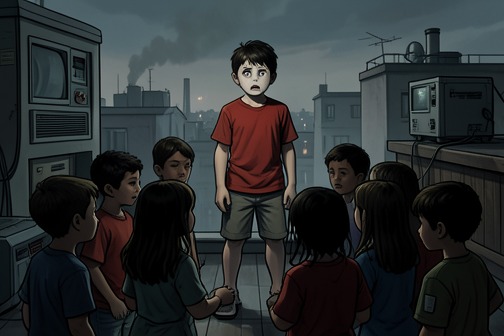
[Wataru Kimura's Department Store Rooftop Fall](entity:event-recall-event-310b7fb66c10) is the act of calculated cruelty that leaves six-year-old [Wataru](entity:character-recall-character-wataru-5eead922f744) unconscious and turns [Kimura](entity:character-recall-character-kimura-2baaf2a90146)’s grief into a determination to reach the person responsible. [Prince](entity:character-recall-character-prince-0d58ca27fcd5) uses the boy’s unfamiliarity with cruelty against him: a warm smile and false reassurance make Wataru trust the very person who is about to push him. The scene’s defining reversal is not simply that Wataru falls, but that his confidence in another person is deliberately made the means of his injury.
## Background and Participants
Wataru is six when Prince’s classmates help take him onto the roof of a department store. They are described as Prince’s friends, but their role is more specific than companionship: they follow his orders. The scene therefore presents the assault as an exercise of Prince’s authority over other children, with Wataru isolated as its target. The evidence identifies no independent quarrel between Wataru and the classmates; the danger comes from a group carrying out Prince’s direction.
The difference in experience between the children is central. Wataru has never encountered cruelty before and is frightened on the roof. Prince recognizes that fear and answers it not with protection but with a performance of kindness. The vulnerable child’s lack of suspicion gives Prince an opening to control what Wataru believes about the danger around him.
## The Deception and the Fall
Prince directs Wataru toward the railing and tells him to look down, assuring him that it is safe and that he need not be afraid. He speaks with a warm smile. Wataru accepts the reassurance and asks whether he will fall. His question makes the risk plain, but it does not interrupt Prince’s plan: the boy is seeking confirmation from the person who has already decided to harm him.
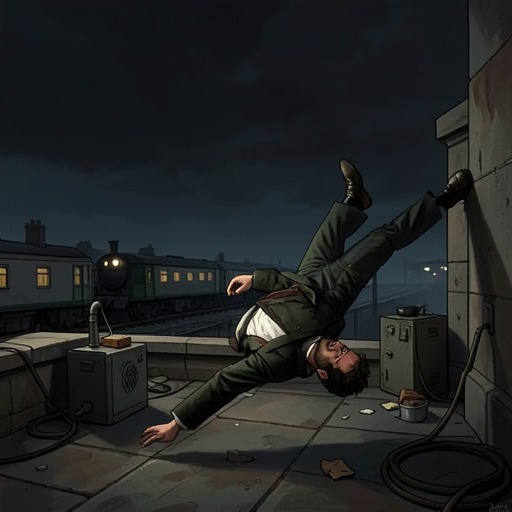
Prince pushes Wataru. The account gives no extended description of the fall itself; instead, it concentrates the moment into the betrayal that precedes it and Prince’s response afterward. He remembers that pushing the child felt intensely good. That reaction makes the violence more than an impulsive shove in the scene’s presentation: the pleasure belongs to Prince’s own recollection of what he did, and stands against the frightened trust Wataru had placed in him. Wataru is left unconscious and unresponsive, later lying in a hospital bed.
## Consequences for Wataru and Kimura
The fall’s immediate consequence is Wataru’s unconscious condition. At [Tokyo Station](entity:location-recall-location-tokyo-station-f824d5350286), Kimura sees a child with a backpack and thinks of his son in the hospital, beautiful but unresponsive in bed. Kimura’s mother has cried out that Wataru looks as if he is sleeping and might even hear what the family says. Kimura experiences the sight of his son as an inward devastation; remembering the roof and the child’s present condition makes the harm impossible for him to treat as an abstraction.
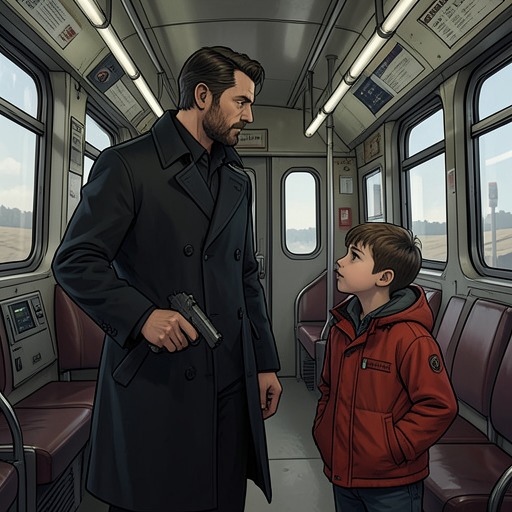
Grief becomes anger. Kimura thinks that the world is broken if someone can push a six-year-old from a department-store roof and continue walking around as if nothing had happened. He is traveling on the Hayate with a handgun in his coat, intending to approach his target from behind. As he boards, he insists to himself that he has quit drinking, can walk straight, and has steady hands. The details connect his attempt to act against Prince with the physical discipline he believes he must maintain; they do not lessen the violence that has brought him onto the train.
## Recollection and Significance
The rooftop assault enters the train confrontation through two sharply different perspectives. Kimura carries its aftermath as the image of his unconscious son and the source of his rage. Prince, looking from the train at a Shinkansen racing past, reflects on overwhelming force and on his own capacity to destroy people. The narrative then turns to the earlier roof scene: the contrast between the huge train’s visible power and Prince’s quiet, interpersonal method of harm makes his assurance to Wataru especially chilling. He did not need speed or physical spectacle to make the child powerless; he used the boy’s trust.
The fall is consequently both a specific act against Wataru and the cause of the confrontation that brings Kimura and Prince together aboard the train. Its remembered details—the railing, the warm smile, Wataru’s fearful question, and Prince’s pleasure—also expose the moral distance between them. Wataru approaches the encounter believing another person’s reassurance; Prince turns that belief into an instrument of injury. The account establishes the cruelty behind Kimura’s pursuit without presenting the rooftop violence as a misunderstanding or an accident.
Event 2
Minegishi Kidnapping and Fujisawa Rescue
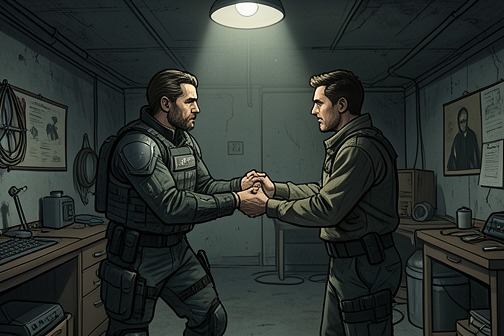
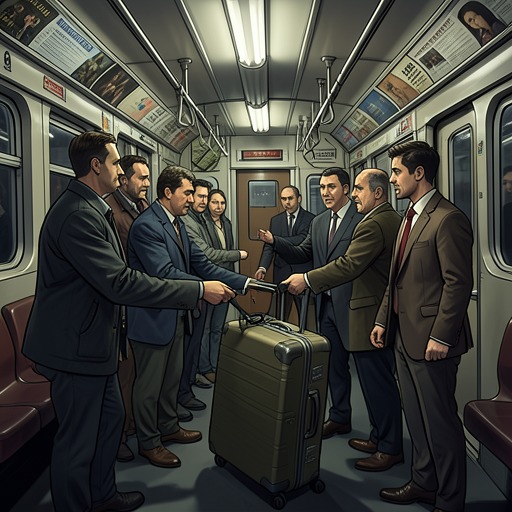
The [Minegishi Kidnapping and Fujisawa Rescue](entity:event-recall-event-minegishi-afebcd99d3a4) brings together a father’s ordered priorities, a captive’s fear that ransom will not save him, and the lethal work of the two men sent to retrieve him. [Tangerine](entity:character-recall-character-tangerine-92552f325c36) and [Lemon](entity:character-recall-character-lemon-6048d05b659f) free [Yoshio Minegishi](entity:character-recall-character-yoshio-minegishi-9787f445d9a7)’s only son from an underground room in [Fujisawa Kongocho](entity:location-recall-location-fujisawa-kongocho-cf214830e675). The rescue achieves its foremost aim, but the reported death toll and the disappearance of the ransom suitcase make clear that a successful extraction is not the same as a clean resolution.
## Background and Stakes
[Minegishi](entity:character-recall-character-minegishi-c0247f8417a0) contacted Tangerine and Lemon from [Morioka](entity:location-recall-location-morioka-dfdcde72cab9) and tasked them with delivering ransom money to the captors and rescuing his son. He also wanted everyone involved killed. The assignment therefore joined three objectives that could pull in different directions: recover the young man alive, bring back the money, and eliminate the perpetrators.
Minegishi ranked those objectives rather than treating them as interchangeable. His son’s return came first, the ransom money second, and killing the captors third. That order gives the mission a clear measure of success, even as the breadth of the request makes its execution more complicated than a straightforward exchange. Lemon later grumbled that Minegishi expected them to save his son, recover the ransom, and kill everyone involved, as if every demand could simply be fulfilled.
The hostage was Minegishi’s only son, a young man in his early twenties. By the time he spoke with Tangerine and Lemon after the rescue, he had been held in a room three floors underground and was already looking much improved. His account conveys why the rescue mattered beyond the recovery of a valuable captive: he believed the group holding him hated his father and suspected that they would kill him even if the ransom were paid. Tangerine confirmed that this fear was well founded, saying that the captors would have killed him once they had the money.
## The Rescue at Fujisawa Kongocho
The holding site was a building in the Fujisawa Kongocho area. The young man recalled being tied up and held underground by what he estimated to be about thirty people. He had thought he was unlikely to survive. The account establishes the scale of his isolation without presenting the rescue as a negotiated handover: Tangerine and Lemon broke into the situation and got him out.
The operation also involved lethal force. A later news report described thirteen people dead in the Fujisawa Kongocho killings and noted that security cameras at the scene had been sabotaged. Lemon heard the report while aboard the train and did not react strongly to the number at first; the darkness of the underground room had left him uncertain how many people he had shot. He later estimated that he had killed at least six, probably more, while Tangerine had killed the rest. The report supplies a public tally, while Lemon’s recollection gives the two rescuers’ division of responsibility; neither account provides a more exact breakdown.
The camera sabotage is part of the report on the killings, but the available account does not identify who carried it out. It therefore marks the scene as one where surveillance had been deliberately disabled without establishing which participant was responsible. The violence and the rescue belong to the same operation: Minegishi’s son was recovered, while thirteen people were reported dead.
## Objectives and Immediate Aftermath
After the rescue, the young man thanked the men who had saved him. His gratitude sits alongside his fear and his blunt assessment of the danger: he had believed that payment would not protect him. Tangerine’s response undercuts any comforting idea that the ransom alone could have resolved the crisis. The captors’ hostility toward Minegishi meant that the money, if delivered, would not necessarily have brought his son home alive.
The ransom itself became an immediate complication. On the train, Tangerine realized that the suitcase containing the money was nowhere under the seat or on the luggage rack where he expected it. Its absence meant that the mission’s second-ranked objective had not been secured, even though the first had been accomplished. The discovery does not establish when or how the suitcase disappeared, but it changes the apparent outcome of the rescue: the son was safe with Tangerine and Lemon, while the money was unaccounted for.
Tangerine and Lemon stepped onto a station platform and looked along the train to see whether anyone was getting off. They saw no one leave. They did notice an unfamiliar man in a flat cap standing a few cars away and pointing into the train, but the sighting alone did not identify him or connect him to the missing case. The search thus begins with observation rather than resolution: the men have a conspicuous absence to explain, but no confirmed lead in the scene described.
## Consequences and Significance
The rescue continues to shape the journey after the men leave Fujisawa Kongocho. Once Minegishi knew which train would carry his son, he bought all the available seats. He explained that he wanted to reduce the number of passengers and variables, making it easier for Tangerine and Lemon to keep the young man safe. The purchase reflects a later effort to control the conditions around his son’s transport, extending the protection begun by the rescue into the next stage of the journey.
The event’s central reversal is that the most important goal and the most visible cost arrive together: Minegishi’s son is brought out alive, while the rescue leaves a reported toll of thirteen dead. The missing suitcase then frustrates the second priority, and the platform search offers no immediate identification of whoever may have taken it. The mission is therefore neither a simple triumph nor an uncomplicated failure. Its outcome separates the priorities Minegishi had ranked: the son is recovered, the money is missing, and the killing of the captors has been carried out at a scale later measured by the news report.
The episode also establishes the practical danger beneath Minegishi’s apparently simple request. His son’s fear that ransom would not secure his release proves accurate; the rescue requires more than carrying money to a waiting group. As the men continue by train, the case and the missing suitcase keep the consequences of the operation in motion, while Minegishi’s later purchase of the seats shows how the successful extraction gives way to another problem: keeping his son safe beyond the underground room.
Event 3
Prince's First Fatal Accident
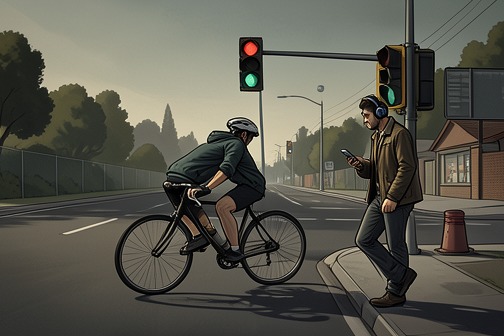
The [Prince](entity:character-recall-character-prince-0d58ca27fcd5)’s first fatal accident begins with an ordinary trip home and ends with a discovery that unsettles him less than the death itself: he feels no guilt. Recounted to [Kimura](entity:character-recall-character-kimura-2baaf2a90146) as the first of the experiences he means to explain, the crossing becomes the point at which the Prince connects his own careless action with another person’s death—and recognizes that the consequences have stirred his curiosity rather than his remorse.
## The ride home
Back when he was in school, the Prince rode his bicycle to a large bookstore after class to buy a book he wanted. On his way home, he reached a main road and stopped at the crossing to wait for the signal. The setting appeared uneventful: no other pedestrians were nearby, traffic was sparse, and a man standing next to him wore headphones and watched his phone.
The Prince does not describe setting out to harm anyone. He began pedalling because the wait seemed long and the road looked clear; rather than wait for the light to change, he rode into the road against the signal. That small decision is the event’s hinge. The Prince acts for his own convenience, but the man beside him reads the movement as a cue and follows.
## The collision
A black minivan appeared as the Prince crossed. The sequence of sounds alerted him to the collision behind him; when he turned, he saw the van stopped in the road and its bearded driver getting out. The man who had been standing beside the Prince lay on the ground, and his phone was broken. The man had been struck and was dead.
The Prince quickly constructed an explanation for how the man came to cross. Because the man had headphones on and was absorbed in his phone, the Prince thought he may have noticed the bicycle moving and followed automatically, assuming the signal had changed. This is the Prince’s reconstruction, not an account of a conversation or an intention the man stated. The road had seemed so quiet that the arriving van surprised the Prince; the pedestrian’s death, once he understood it, did not produce the same surprise.
## What the Prince learns
The Prince later tells Kimura that the episode taught him two things. First, he believed that a person could cause a death and still escape notice if the circumstances made it appear to be an ordinary traffic accident. He recalls that the incident was treated as a typical accident and that no one paid attention to him. The Prince does not describe a deliberate plan to kill the man; instead, he dwells on the possibility that his own role went unseen.
His second discovery is personal: although he believed the death was his fault, he did not feel bad. The contrast between responsibility and feeling is central to the memory. The Prince presents the absence of remorse not as an emotion he overcame, but as a fact about himself that he noticed at the time. The accident therefore becomes more than a fatal consequence of crossing against a signal: in his telling, it is also the first evidence he finds about his own response to another person’s death.
## The memory’s significance
The Prince identifies this moment as the beginning of his interest in killing. His curiosity turns toward what killing is like and how a person reacts while being killed. The recollection thus links an accidental death to a later, more deliberate fascination, while keeping a distinction between the original act and the interest that follows it. The crossing is not recounted as a planned experiment; it is the Prince’s first encounter with fatal consequences and with his own lack of remorse.
The event also shapes the exchange with Kimura. The Prince offers the accident as an explanation, while Kimura responds by treating questions about killing as a familiar form of teenage angst. The Prince’s question about why killing is wrong is not, as the narration makes clear, a cynical provocation or a joke: he wants an answer from an adult that he finds satisfying, and he does not expect Kimura to provide one. That unresolved question gives the memory an ending beyond the crossing itself. The accident has taught the Prince that a death can be treated as an accident and that he may feel no guilt; it has not given him a convincing reason to regard killing as wrong.
Event 4
Kimura Stops Prince's Electrocution Experiment on Wataru
[Kimura Stops Prince's Electrocution Experiment on Wataru](entity:event-recall-event-prince-be76e6f035c8) begins as a tense encounter at the escalators and is later transformed by [Prince](entity:character-recall-character-prince-0d58ca27fcd5)’s explanation into the story of an attack [Kimura](entity:character-recall-character-kimura-2baaf2a90146) interrupted without knowing it. Kimura finds [Wataru](entity:character-recall-character-wataru-5eead922f744) holding hands with a composed schoolboy and forcibly takes his son back; only during a later conversation aboard the train does Prince disclose that he meant to use Wataru to test a high-voltage device. The decisive act is Kimura’s intervention, while the revelation changes the meaning of the boy’s earlier, reassuring performance.
Event 5
Takuya's Death After Bullying
[Takuya](entity:character-recall-character-takuya-3be9504bc5cf)’s death is revealed not in a direct depiction of his final act but in a frightened confession by the schoolboys involved in his bullying. The disclosure turns [Kimura](entity:character-recall-character-kimura-2baaf2a90146)’s accidental intervention in another student’s punishment into a confrontation with the lethal consequences of the [Prince](entity:character-recall-character-prince-0d58ca27fcd5)’s rule: the boys say they meant to bring Takuya to the brink of suicide, not to cause his death, but the distinction offers no escape from what happened.
## The disclosure
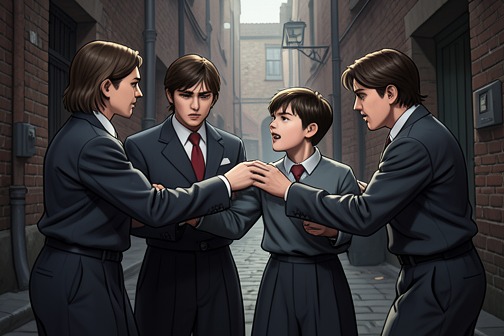
Later that day, after taking his parents to the station, Kimura walks back through an old shopping arcade and a residential neighborhood with [Wataru](entity:character-recall-character-wataru-5eead922f744). Near an alley beside a closed-down gas station, Wataru notices someone crying. Kimura, distracted by his father’s warning that alcohol dependency has no cure and that he can never drink again, initially dismisses the scene as older boys acting out. Only after Wataru draws his attention does Kimura see four students in uniform: two are holding another boy by the arms, while a fourth faces them. The captive student pleads for them to stop.
The schoolboys’ conversation makes clear that this is not an isolated quarrel. They discuss an electric shock as a punishment and pressure the boy to accept it, arguing that otherwise the whole group will be shocked and will blame him for it. Their proposed bargain—take the punishment now and the others will be grateful—makes coercion sound like a choice. One boy suggests pretending that he received the shock instead, but another doubts that the Prince would believe the lie. The Prince’s authority reaches into the alley even when he is not present.
## From bullying to death
The boys connect the present punishment to Takuya, whose name Kimura recalls from something he heard in a train toilet. Kimura taunts the students about their earlier fear that Takuya would be punished for disobeying the Prince. The boy with the round face then says quietly that Takuya is dead. The others turn on him for telling a stranger, their faces drained of color; the sudden reaction marks the statement as a dangerous truth they had meant to keep among themselves.
When Kimura asks whether the death is literal, the round-faced boy explains that Takuya jumped because they had overdone it. Another student says that even before he posted the video online, Takuya had been saying that he wished he were dead. The boys’ account therefore links repeated bullying and public humiliation to the circumstances preceding Takuya’s death. It does not present a full account of the jump or establish details beyond what the students disclose, but it makes clear that Takuya had expressed suicidal thoughts before the video appeared and that the bullying continued around him.
## The Prince’s order and the boys’ complicity
The students describe their intended limit with chilling precision: they were supposed to push Takuya to the point of suicide, but not actually make him do it. The Prince is said to be angry because that limit was crossed. Their explanation exposes a hierarchy in which the Prince sets the terms of punishment and the students enforce them, while also showing that the boys are not merely following a harmless ritual. They participated in bullying Takuya and in posting a video; their claim that they did not mean for him to die sits beside their own account of deliberately driving him toward suicide.
That contradiction is central to the event’s force. The boys speak as though the boundary between intended pressure and actual death should distinguish what they meant to do from what happened. Yet their stated plan already treated Takuya’s despair as something to be deliberately produced. The present boy being held is being made to face a similar forced choice: take the shock, or be blamed for exposing everyone else to it. Takuya’s death gives that threat a consequence the boys can no longer keep abstract, even as they continue to enact the same logic against another student.
## Kimura’s response and the scene’s turn
Kimura initially tries to treat the situation as childish posturing, and when he hears that Takuya is dead he answers with taunts about other things people call dead. His mockery is a way of avoiding the fear prompted by the students’ admission; it cannot make the disclosure figurative. He then acknowledges that when someone dies, they are gone. Wataru continues tugging at his hand, and Kimura turns to leave, recognizing that he may have become involved in something dangerous.
The boys’ response changes the encounter. They call after Kimura to help them, and all four plead at once. Their voices overlap without having planned to speak together; their composure breaks as they reach out to an adult. The appeal does not erase their part in Takuya’s bullying, but it reveals that the Prince’s system has made them both instruments of punishment and frightened subjects of it. Takuya’s death is thus disclosed at the point where the boys’ effort to contain the secret collapses, while another student remains physically trapped in the same coercive pattern.
Event 6
Ransom Briefcase Theft Aboard the Hayate Train
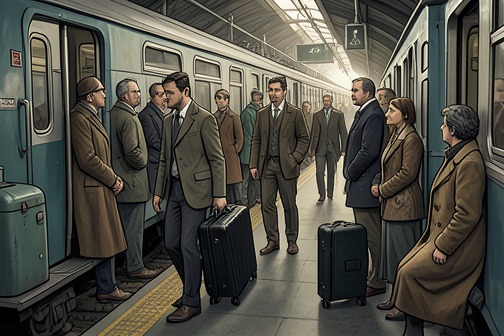
The [Ransom Briefcase Theft Aboard the Hayate Train](entity:event-recall-event-hayate-2d03a414f6e7) turns an ordinary luggage-storage space into the hinge of a criminal operation: [Minegishi](entity:character-recall-character-minegishi-c0247f8417a0)’s ransom suitcase vanishes from between the cars, and the ensuing search is answered for the reader by the sight of [Nanao](entity:character-recall-character-nanao-7c7ef51f63e8) quietly carrying away the [Black Suitcase](entity:object-recall-object-99d1c68cab36). The theft’s force lies in the gap between those two perspectives. [Tangerine](entity:character-recall-character-tangerine-92552f325c36) and [Lemon](entity:character-recall-character-lemon-6048d05b659f) know the money is missing; Nanao knows exactly where it is and has already been told where to take it.
## Background and the suitcase’s disappearance
Minegishi had ranked his priorities plainly: recover his son first, retrieve the money next, and kill the people responsible after that. The suitcase therefore carried more than cash. Its disappearance threatened the second item on a list that also included a child’s return and the perpetrators’ lives. It was a decent-sized case with a sturdy handle, though Tangerine thought it looked too small to support more than a few days away. At first he expects to find it on the luggage rack or beneath a seat. It is nowhere in their immediate surroundings.
The suitcase had not stayed where Tangerine expected. Lemon explains that large luggage can be stored in the gangway spaces between cars on current Shinkansen models. He had moved Minegishi’s ransom suitcase to the storage area on the other side of their car, after Tangerine had advised him to use the overhead rack. When Lemon goes back to check, the space is empty. The change of location, meant to put the case in a designated place for large bags, has made it less visible to the people responsible for it.
## The search in car three
Tangerine’s worry sharpens into a premonition when Lemon reports the loss. The two men hurry through car three to the gangway beside the bathrooms and sink area. There they find two racks: a large suitcase remains on the upper one, but it is not the case containing Minegishi’s money. The smaller shelf below is empty, with only the sign that a payphone may once have occupied the space. Tangerine points to that vacant rack, confirming where Lemon says he put the suitcase.
The search produces no recovery and no visible explanation. In the narrow inventory of the storage area, the remaining large case becomes a misleading possibility, while the empty shelf makes the absence unmistakable. The scene turns on a simple but consequential reversal: the suitcase was placed in storage to keep it safe, yet by the time Tangerine and Lemon reach that storage space, it has already been removed.
## Nanao’s retrieval
The reader is shown the other side of the disappearance through Nanao’s assignment. His ticket is printed for travel from [Tokyo](entity:location-recall-location-tokyo-0b4edfa3fe2f) to [Morioka](entity:location-recall-location-morioka-dfdcde72cab9), although he had expected to get off at Ueno. [Maria](entity:character-recall-character-maria-de0c38967fe7) tells him that the Black Suitcase is in the luggage space between cars three and four, identifies a sticker near its handle, and says its owner is in car three. Once he has the bag, he is to head in the opposite direction and get off as soon as he can. Maria explains that the ticket to the end of the line is a precaution in case anything happens.
With five minutes remaining before Ueno, Nanao reaches the storage space and finds the described bag without difficulty. It is mid-sized, fitted with wheels, hard-sided, and marked by the sticker near the handle. He pulls it from the rack quietly. The careful match between Maria’s instructions and the suitcase’s appearance establishes that this is not a mistaken bag or an unrelated disappearance: Nanao has taken the case Tangerine and Lemon are missing. His ticket, destination, and route away from the owners all belong to a prepared plan.
After retrieving it, Nanao walks back through car four, passes through car five, and enters the gangway between cars five and six. He keeps his steps even and sees no one paying attention to him. The shift away from car three gives him distance from the people who own the suitcase, while the short interval before the train reaches Ueno makes the timing of the theft urgent. Nanao had worried that some obstruction or confrontation might delay him, but the route proves clear enough for him to continue without drawing notice.
## Consequences and narrative significance
The theft brings the two strands of the episode into sharp contrast. Tangerine and Lemon search the place where the suitcase was stored; Nanao has already lifted it from that place and is moving in the opposite direction. The ordinary appearance of the object—a wheeled, hard-sided piece of luggage on a rack—conceals its role as the money at stake in Minegishi’s demands. Once it disappears, however, that ordinary object reorganizes the action: the searchers hurry through the car, while Nanao’s assignment becomes a race against the approaching Ueno stop.
The episode also establishes the method behind Nanao’s apparent access to the suitcase. Maria supplies precise location and identifying details, and the Morioka ticket gives him a contingency beyond his expected stop at Ueno. What looks to Tangerine like an inexplicable loss is, for the reader, the successful execution of an instructed theft. The discovery does not resolve the situation for Minegishi’s men; it makes their immediate problem more acute, because the money is gone and the person carrying it has already moved away from the car where it was left.
Event 7
Prince Subdues Kimura Aboard the Train
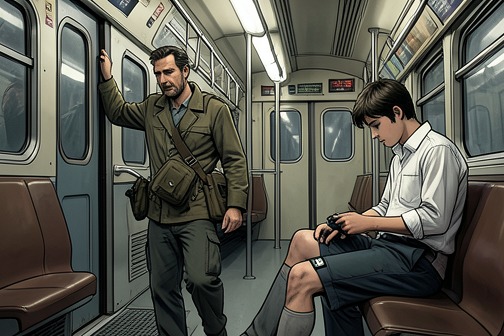
[Prince Subdues Kimura Aboard the Train](entity:event-recall-event-prince-150eabaeae1e) turns [Kimura](entity:character-recall-character-kimura-2baaf2a90146)’s attempt to confront the [Prince](entity:character-recall-character-prince-0d58ca27fcd5) into a sudden reversal of power. Kimura enters car seven armed and looking for the teenager who pushed his son, [Wataru](entity:character-recall-character-wataru-5eead922f744), from a department-store roof. Before he can act, the Prince incapacitates and restrains him, then reveals that Kimura’s predictable pursuit has left Wataru exposed to a threat at the hospital.
## Approach and Ambush
Kimura enters car seven with one hand closed around the gun inside his bag. He counts the rows as he moves down the aisle. The carriage is quieter and emptier than he expected: only a scattering of passengers occupies the seats. In the fifth row, a teenager in a white-collared shirt and blazer watches other Shinkansen trains arrive. The boy’s neat appearance and slight build give Kimura pause. A row away, Kimura hesitates over whether he can bring himself to hurt someone who looks so young and vulnerable.
The hesitation ends when the teenager turns and presses a homemade stun device against Kimura’s thigh. Kimura first mistakes the sudden disruption for a problem with the train; then he realizes that his own body has been disabled. The Prince has used the kind of homemade device Kimura has encountered before. The armed pursuer is now unable to move freely, and the Prince has seized the initiative before Kimura can draw his gun.
When Kimura comes to, he is seated beside the window with his hands bound in front of him and his ankles secured with sturdy fabric and duct tape. He can bend his arms and legs, but the restraints prevent him from going anywhere. The change is practical as well as symbolic: Kimura arrived expecting to choose how the confrontation would proceed, but the Prince has made him captive and controls the weapon.
## A Pursuit Turned into a Trap
The Prince treats Kimura’s arrival not as a surprise but as the predictable result of information deliberately placed in his path. He mocks Kimura for coming after him in person and for being easy to anticipate. Kimura’s question about whether the Prince planted the information confirms the reversal: what seemed to be a straightforward chance to find the boy was part of the Prince’s plan. The Prince had also anticipated that Kimura would want more than a quick, unannounced attack. He believes Kimura would want to frighten him and force an apology, and says he expected to get Kimura first.
The Prince has taken Kimura’s gun and holds it close between them, out of sight of other passengers, while Kimura initially struggles against the restraints. He tells Kimura that he must hear his account through to the end. The threat of the gun helps quiet Kimura, but the Prince’s control does not rest on the weapon alone: he can speak at length, set the terms of the encounter, and make Kimura listen while immobilized. His later use of the homemade stun device makes explicit how carefully he has prepared to overcome Kimura at close range.
The Prince’s composure sharpens the contrast between them. Kimura’s anger is immediate and physical; when he accuses the Prince of pushing Wataru from the roof, he lunges despite being tied up. The Prince responds calmly, holding him back with the reminder that what he is about to say concerns Wataru’s life. At the mention of his son, Kimura falls back into his seat. The Prince has found a point of leverage that restraint and threats alone could not provide.
## The Threat at the Hospital
The Prince tells Kimura that he has someone waiting near the [Tokyo](entity:location-recall-location-tokyo-0b4edfa3fe2f) hospital where Wataru is receiving life support. He describes the person as a former medical-equipment-company employee who could interfere with the machine keeping Wataru alive. Kimura disputes that this could be done, but the Prince does not need to prove that the threat has been carried out; he makes Kimura confront the possibility while his son is unable to protect himself.
The Prince explains the signal system that would authorize the attack. He can call his accomplice directly, or a call from the accomplice that goes unanswered for more than ten rings—including a call outside the scheduled contacts at each station—will count as permission. He says the accomplice is waiting for that signal near the hospital. In this arrangement, even a missed call becomes part of the threat: Kimura cannot treat silence from the Prince as reassurance.
Kimura points out that a phone might lose service in a train tunnel. The Prince counters that antennas have been installed in tunnels, then makes the danger more concrete by describing how he could get off at Omiya, go to a movie, and switch off his phone. By the time he emerged, he says, something terrible might have happened to Wataru’s life-support equipment. The conditional threat gives the Prince leverage beyond the carriage, turning the distance between the train and the hospital into part of his control over Kimura.
## Consequences and Significance
The immediate outcome is that Kimura cannot act against the Prince on his own terms. He has been disarmed, bound, and made dependent on listening; when he tries to resist, the Prince redirects his attention to the danger facing Wataru. The confrontation therefore becomes a coercive contest over the son’s safety as well as a physical reversal between the two men. The Prince’s advantage lies not only in the stun device and restraints, but in his ability to make Kimura’s every possible response seem capable of endangering Wataru.
The scene also links Kimura’s presence on the train to the earlier violence against his son. Kimura has come after the Prince because of Wataru’s fall, but the Prince turns that history into a means of controlling him. What begins as Kimura’s search for a chance to confront the boy becomes an ambush whose stakes reach from car seven to a hospital in Tokyo. The event establishes the Prince as a planner who anticipates an opponent’s actions and extends his threats through an accomplice, while leaving the outcome for Wataru’s life-support equipment unresolved in this confrontation.
Event 8
Little Minegishi Dies Aboard the Shinkansen
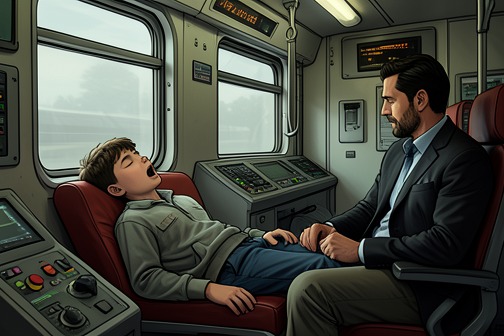
[Little Minegishi](entity:character-recall-character-little-minegishi-28bc1d9bda18) dies during the Shinkansen journey, turning a search for a missing suitcase into a crisis involving both a dead passenger and a concealed death. [Tangerine](entity:character-recall-character-tangerine-92552f325c36) and [Lemon](entity:character-recall-character-lemon-6048d05b659f) find him still in his seat, apparently asleep; they have no clear explanation for what happened, and their effort to keep the death from being noticed collapses at [Omiya Station](entity:location-recall-location-omiya-station-39f072999588) when the movement of his body draws attention from the platform.
## Background and Discovery
Tangerine is walking through the train looking for a mid-size black suitcase when he reaches Little Minegishi, seated halfway down the car. The boy’s eyes are closed, his mouth open, and his body leans towards the window. His posture initially resembles sleep. The circumstances immediately behind him make that appearance especially misleading: two days earlier, he had been kidnapped and held captive, escaped during the night, and been hurried onto the train without sleep. Tangerine does not pause to consider that history. He reacts to the sight of the boy, sits beside him, and realizes that the situation has changed from a search for luggage to a death.
Lemon comes closer and first treats the boy’s stillness as sleep. Tangerine tells him that the crisis has worsened, then states that Little Minegishi is dead. Lemon’s disbelief gives way to an alarmed acknowledgment of how serious their position has become. His reaction includes a brief, inappropriate effort to count the words in his own exclamation, a small instance of the strained levity that recurs in the men’s responses. Neither man, at this point, can say how the boy died.
## Uncertain Cause and Immediate Response
The body offers no obvious explanation. Tangerine finds no visible cuts or blood and looks inside the boy’s mouth, cautious about the possibility of poison. Poison remains only one possibility; Tangerine also raises an allergic reaction leading to shock, or the strain of the boy’s recent ordeal, sleeplessness, and exhaustion causing his heart to fail. These are conjectures made in the absence of evidence, not a determined cause of death. The scene leaves the central question unresolved, while making clear that the boy has died after a period of extreme upheaval and physical depletion.
The men respond not by seeking help, but by managing how the body appears. Tangerine moves Little Minegishi to the window seat and props him upright, with his head slightly forward, so that he might be taken for a sleeping passenger. Tangerine then takes the middle seat and Lemon the aisle seat. They remain beside the body as they continue to deal with the missing suitcase. Their arrangement makes the concealment practical and temporary: Little Minegishi is in plain view, but his posture is being used to disguise what has happened.
## Dispute and Concealment
The death becomes entangled with the men’s other failures. Lemon’s attention to the corpse is mixed with his search for the suitcase, which he has not found. At one point he sits casually in the aisle seat and turns to a conversation about characters from Thomas and Friends rather than addressing the seriousness of the situation. Tangerine recognizes the avoidance and insists that Lemon attend to what is in front of them: [Minegishi](entity:character-recall-character-minegishi-c0247f8417a0)’s son is no longer breathing, the body is becoming cold, and the suitcase is gone. He compares their predicament to people sent on an errand who return without the requested vegetables and have also lost the wallet. The comparison gives their combined failures a deliberately undignified scale, even as the corpse makes the stakes unmistakable.
Their argument also exposes competing efforts to assign responsibility. Tangerine blames Lemon for leaving the boy alone while checking on the suitcase. Lemon concedes that losing the bag may be his fault but rejects responsibility for the death, treating it as something the boy brought upon himself. Tangerine challenges that reasoning directly. The exchange does not produce an explanation or resolve their disagreement; instead, it shows how quickly the men’s fear and confusion turn into blame. Lemon later eats crackers, while Tangerine remains unsettled by the boy’s body and by the unfinished problem of the suitcase.
## Omiya Station and Exposure
As the Shinkansen slows for Omiya Station, Tangerine says he must report to Minegishi’s man and intends to wait by the door. He says he will tell the contact that everything is going smoothly, a description sharply at odds with the dead boy and missing suitcase inside the train. Lemon worries that Tangerine might get off and run. Tangerine considers the possibility but concludes that escape would probably make matters worse. The planned report therefore continues, at least in appearance, while the men remain aboard with the body.
When the train begins to leave, a man in a blue shirt watches from the platform and follows it briefly. Tangerine gives him a short wave. Lemon then lifts Little Minegishi’s dead hand and waves it too, treating the body in a way that makes the deception visible rather than more convincing. Tangerine pulls Lemon’s arm away; the movement causes the body to lurch, its head falling forward. The effort to make Little Minegishi look peacefully asleep is undone by the very gesture intended to sustain it. The man on the platform reacts with alarm, and Tangerine sees him raise a phone to his ear as the train gathers speed. The men manage to set the body upright again, but the departing train has not erased what the observer saw.
## Consequences and Narrative Significance
Little Minegishi’s death remains unexplained in these scenes. No cause is confirmed, and the competing possibilities raised by Tangerine do not develop into a finding. What does become clear is the consequence of trying to conceal the death while attending to the missing suitcase: the corpse is treated as a problem of appearance, and a careless movement threatens to expose that effort to someone outside the train. The body’s stillness first permits the mistaken impression of sleep; its movement then makes that impression untenable.
The event also changes the terms of Tangerine and Lemon’s journey. They had been searching for the suitcase and attempting to maintain contact with Minegishi’s organization; now they must carry the fact of the boy’s death alongside the unresolved loss of the bag. Their talk shifts among suspicion, blame, strained humor, and mundane distractions, but none of these responses supplies the missing cause or restores control. At Omiya Station, the possibility that their concealment has been witnessed adds another problem to an already deteriorating situation. Little Minegishi’s death is thus both a personal loss and a decisive rupture in the men’s attempt to present the job as proceeding normally.
Event 9
Hornet Assassinates Terahara
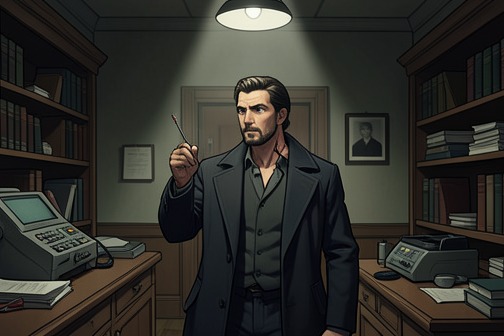
The [Hornet](entity:character-recall-character-hornet-2ac6c7f226f1)’s assassination of [Terahara](entity:character-recall-character-terahara-d86d820f45a7) marks the violent turning point associated with the collapse of [Maiden](entity:organization-recall-organization-maiden-7f6788b238da), a powerful [Tokyo](entity:location-recall-location-tokyo-0b4edfa3fe2f) underworld organization. The account identifies Terahara as its leading figure and links his death, alongside his son’s, to the fragmentation of the operation and a broader shift in the underworld.
## Background
Terahara had made a fortune in Tokyo and, in doing so, created considerable disorder. His organization, Maiden, was prominent enough that its collapse would leave its operation to be divided among others. The assassination is later recalled as the moment the Hornet became known in the underworld.
## The Assassination
About six years before the events in the present, the Hornet entered Terahara’s offices and killed him. The account describes the method as a poison needle used to prick a victim in the neck or fingertip. The killing established the Hornet’s reputation rapidly, though the exact identity behind that name remained uncertain: rumors held that the Hornet was actually two people working together.
## Collapse and Aftermath
A separate account dates Maiden’s collapse to roughly six or seven years earlier and says that both Terahara and his son died before the operation was split up. It connects the assassination to the end of Terahara’s organization, but does not establish that the Hornet also killed Terahara’s son. In the aftermath, a man who had anticipated that the situation would turn ugly left Tokyo for [Morioka](entity:location-recall-location-morioka-dfdcde72cab9). The event thus carries consequences beyond the death of one underworld leader: it precedes the division of Maiden and the dispersal of people caught in its uncertain aftermath.
Event 10
Nanao’s mistaken kidnapping and escape
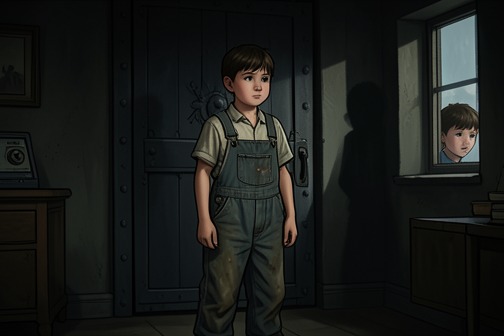
[Nanao’s mistaken kidnapping and escape](entity:event-recall-event-nanao-s-mistaken-kidnap-dd616ca32ed7) is the childhood episode through which he first learned that he could rely on his own actions when help did not come. Taken in place of a wealthy friend, he was held with another boy, whose appeal for help he did not answer. [Nanao](entity:character-recall-character-nanao-7c7ef51f63e8) escaped alone at eight, but the memory remained bound to a harder question: why he left the other child behind. The episode is both a successful escape and an unresolved source of trauma.
## The mistaken abduction
Nanao recounts that he was walking home with a rich friend when a game of rock-paper-scissors left him carrying the friend’s bag. The bag was different from those carried by the rest of their group, a custom-made item associated with wealth. The kidnappers mistook its carrier for the boy they intended to take. Nanao told them that they had the wrong child, but at first they did not believe him. His friend, the actual target, remained safe at home with his parents.
That mismatch shaped what followed. The kidnappers demanded ransom from the wealthy friend’s parents, who did not take the demand seriously because their son was already with them. The kidnappers’ anger then fell on Nanao, and they treated him increasingly cruelly. Only after he continued insisting that they had taken the wrong boy did they accept the mistake. They contacted Nanao’s parents, reasoning that some payment would be better than none. The shift from mistaken identity to a demand directed at his own family did not, however, bring Nanao the rescue he needed.
## A rescue that did not come
Nanao’s father had no money to give the kidnappers. Nanao understood his father’s response as a limit imposed by circumstance: even a parent who wanted to save his child could not provide what he did not possess. The kidnappers were upset and blamed his father, but Nanao grasped the practical consequence for himself. If his father could not secure his release, he would have to save himself. He later connected this realization to his sense that he could manage things on his own.
The escape itself survives in Nanao’s memory as a sequence of opportunity and uncertainty. He recalls the kidnappers’ carelessness, his own energy and determination, a railway crossing arm lowering at the right moment, and a bus arriving. Once the bus pulled away, relief was accompanied by fear: he had no money to pay the fare. Even so, he had escaped. The memory’s emphasis is not on a rescue by an adult or the recovery of the intended target, but on an eight-year-old acting for himself amid circumstances he could not control.
## The boy left behind
Nanao’s escape did not include the other boy being held with him. The boy, unfamiliar to Nanao and distinguished in his recollection by a buzz cut, realized that Nanao was going to leave and asked for help. Nanao did not help him. In retrospect, he could not give a clear reason: he wondered whether the boy might have slowed him down, but said he did not remember deciding that, and thought the failure to help may have been instinctive. The uncertainty matters to the memory; Nanao does not turn his choice into a deliberate calculation he can confidently explain.
He never knew who the boy was or what happened to him. He describes that unknown child as his personal trauma and says that he would rather not think about him. As Nanao tells the story to a suited stranger, the memory seems to open in a series of mental compartments: the successful escape brings the image of the boy back with it. Nanao tries to close that recollection again, but cannot supply the ending the boy’s story lacks. His own freedom and the other child’s unknown fate remain inseparable parts of the same event.
## Aftermath and significance
The kidnappers were never caught. Nanao’s father did not report the kidnapping to the police, believing that doing so would cause more trouble than it was worth, and Nanao himself did not particularly care at the time. He was proud that he had escaped. That pride does not erase the other boy’s unanswered plea; rather, the two memories sit uneasily together, one confirming Nanao’s ability to act and the other marking the limit of what he can remember or repair.
The episode also helps explain how Nanao frames later misfortune. While telling the stranger about the kidnapping, he links it to a life of mishaps and recalls failing his high-school entrance exam despite studying hard, after the student beside him kept sneezing. His account moves from a childhood danger he escaped through his own effort to smaller setbacks he treats as part of a continuing pattern. The book presents that pattern through Nanao’s recollection, not as proof that every later failure has the same cause.
[Kimura](entity:character-recall-character-kimura-2baaf2a90146)’s reflections on helplessness offer a separate parallel rather than part of Nanao’s childhood episode. Kimura remembers a captive who did not leave even though the door was unlocked, and recalls an explanation of how repeated punishment can teach a person to stop trying. He sees a related pattern among schoolchildren afraid of the [Prince](entity:character-recall-character-prince-0d58ca27fcd5): repeated suffering and the threat of electric shocks have helped convince them that resistance is futile. Against those examples, Nanao’s escape stands out as an instance in which he did act, while his father’s inability to pay and his own failure to assist the other boy prevent the story from becoming a simple account of self-reliance. The remembered event establishes both the resourcefulness Nanao takes pride in and the unresolved guilt he avoids examining.
Event 11
Prince Frames Takuya's Father
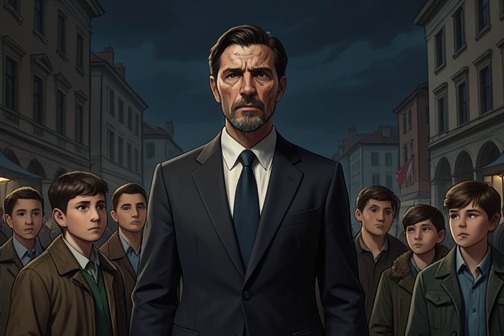
[Prince](entity:character-recall-character-prince-0d58ca27fcd5) Frames [Takuya](entity:character-recall-character-takuya-3be9504bc5cf)’s Father is revealed as part of Prince’s effort to silence someone investigating him: students tell [Kimura](entity:character-recall-character-kimura-2baaf2a90146) that they were directed to build a sexual-misconduct case against Takuya’s father, after which the man was arrested and lost his job.
## Background and Disclosure
The account emerges while Kimura is speaking with four schoolboys about Takuya, who has died. One boy brings up Takuya’s father, explaining that the man had been arrested the previous month after an allegation involving a girl at their school and had subsequently been fired. The detail changes the conversation from Takuya’s death to the pressures surrounding his family.
Kimura initially treats the allegation as grounds for the father’s punishment, but the boys’ uncertainty prompts him to ask whether they had set him up. They do not deny it. When Kimura asks whether the father was innocent, they remain silent, so the scene does not establish his innocence directly. A student then explains that they acted on Prince’s instructions and connects the allegation to the father’s attempt to uncover information about him. Kimura recognizes the episode as a case Prince had arranged through the students, presenting the arrest and dismissal as consequences of an effort to manufacture a sexual-misconduct accusation.
## Learned Helplessness and the School’s Fear
Kimura interprets the boys’ silence and disbelief at the suggestion of resisting Prince through an earlier experience guarding a kidnapped man. The man was not tied up and the apartment door was unlocked, yet he did not leave. A guard who relieved Kimura explained this behavior through learned helplessness: in an experiment, a dog exposed to shocks it could not avoid later failed to escape even when jumping would protect it. Repeated punishment, the guard argued, can teach people that action is futile, a pattern also seen in abusive relationships. The comparison gives Kimura a framework for understanding why the schoolboys treat Prince’s power as immovable even when resistance might be possible.
Kimura sees the students’ helplessness as learned rather than innate. They have repeatedly witnessed classmates and adults suffer under Prince, and that history has persuaded them that they cannot prevail. He does not know precisely how Prince administers the electric shocks or what orders he gives, but suspects the shocks reinforce the boys’ submission. Their efforts to look confident and establish rank among their peers coexist with fear; Kimura regards them as young people whose standing in their small social world feels perilously important.
The pattern becomes visible again when Kimura watches students prepare defibrillator pads for an experiment involving [Tomoyasu](entity:character-recall-character-tomoyasu-a2397af9cc08) and his dog, [Takeshi](entity:character-recall-character-takeshi-65314f00ee6c). One student challenges another’s reluctance by threatening to report him to Prince, and the boys deny or deflect responsibility rather than trust one another. Kimura reads this division as a consequence of rule by fear: each student focuses on avoiding punishment, while anger at the person in power is redirected toward potential allies. He compares the dynamic to the distrust he had heard characterized in [Terahara](entity:character-recall-character-terahara-d86d820f45a7)’s criminal organization, where members watched one another and sought to ensure that someone else bore their leader’s anger. In both settings, fear makes collective resistance less likely by turning self-protection into the group’s governing principle.
## A Pattern Beyond Takuya’s Family
The account places the case against Takuya’s father within a wider pattern of adults being removed from the school. A student tells Kimura that Prince has also driven out three teachers: one left after becoming depressed, another was caught in an incident involving a student, and a third had an accident. The students give no further details, so these outcomes are not all shown to have been arranged in the same way. Set beside their account of Takuya’s father, however, they suggest that Prince’s influence reaches beyond direct control of the pupils and can also obstruct adults who might challenge or investigate him.
## Kimura’s Limited Intervention
When Kimura raises the possibility of bringing down Prince, the boys react as though the idea is beyond their comprehension; none has considered challenging him. Kimura can see that fear has made their obedience seem inevitable, and even thinks controlling them may not be difficult. Yet he checks his impulse to become involved, comparing the boys to a stray dog that should be left alone, and tells them to work it out for themselves. His response leaves a tension unresolved: he recognizes how Prince’s power has narrowed the students’ sense of what they can do, but at this point he does not offer to lead their resistance.
Event 12
Kimura Foils Prince's Electrocution Experiment
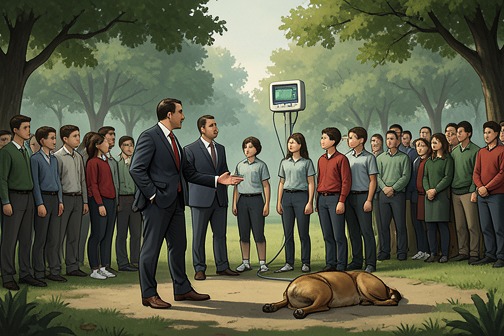
[Kimura Foils Prince's Electrocution Experiment](entity:event-recall-event-kimura-prince-ee0fb8237a79) is the park confrontation in which [Kimura](entity:character-recall-character-kimura-2baaf2a90146) stops the [Prince](entity:character-recall-character-prince-0d58ca27fcd5)’s classmates from testing a powerful prototype defibrillator on [Takeshi](entity:character-recall-character-takeshi-65314f00ee6c), the dog [Tomoyasu](entity:character-recall-character-tomoyasu-a2397af9cc08) has loved since childhood. What begins as an attempted rescue becomes a direct contest between Kimura’s physical intervention and the Prince’s command over the students. In the Prince’s later recollection, the episode also marks a limit in that authority: Kimura makes him feel fear, and the Prince’s wish to reverse that humiliation helps explain why he later targets Kimura’s son.
## Background and the Students’ Helplessness
The confrontation takes place against a school hierarchy the students have come to regard as unassailable. Kimura recognizes their stunned reaction to the possibility of opposing the Prince: they have not even considered that they might try. He connects their passivity to a past job guarding a kidnapped man who had been left in an unlocked room, untied but unable to make himself leave. A departing guard explained the pattern through learned helplessness: after repeated punishment that could not be avoided, a person might stop trying even when escape becomes possible.
Kimura applies that idea to the students. They have repeatedly seen classmates and adults suffer under the Prince, and the electric shocks used to control them have helped make powerlessness feel inevitable. Their apparent toughness and attention to their standing among peers do not conceal how young and frightened they are. Fear has shaped their expectations so deeply that they can mistake obedience for the only available choice.
At the park, that fear also works against solidarity. As the students prepare the device, one challenges another’s hesitation by threatening to report him to the Prince. Kimura sees how rule by fear turns potential allies into watchers of one another, each more concerned with avoiding punishment than resisting the person who commands them. He compares this atmosphere with what he had heard about [Terahara](entity:character-recall-character-terahara-d86d820f45a7)’s organization, where suspicion and the search for someone else to blame eventually set members against one another. The students’ actions are not presented as carefree bullying: they are participating in cruelty, but the scene also shows the pressure that has made them afraid to refuse.
## The Prince’s Plan for Tomoyasu and Takeshi
The device is not an ordinary automatic defibrillator. A classmate whose father is a doctor and runs a private clinic has access to a prototype that is stronger than a typical device. It uses electrode pads placed on either side of the heart and can deliver a shock when its readings indicate one is needed. The Prince hears about it and orders the doctor’s child to steal it so the group can test its power. Kimura understands that a device meant to restart a stopped heart could be dangerous if used on a person whose heart is still functioning.
The Prince first selects Tomoyasu as the test subject. Tomoyasu cries and begs him to stop, and the Prince offers to spare him on the condition that he bring Takeshi instead. Tomoyasu has known the dog since childhood and loves him. The substitution therefore turns the experiment into a forced choice that tests Tomoyasu’s attachment and exposes how far fear can push him toward betraying what he values.
The Prince’s later account makes clear that the device’s effects are not his only concern. He knows that a death could throw the students into confusion and leave them looking to him for direction. More immediately, he wants to see what it will do to Tomoyasu to offer up his faithful dog. The episode belongs to a wider pattern in which the Prince undermines his classmates’ sense of worth and then induces them to betray someone important to them. By making Tomoyasu’s relationship with Takeshi the instrument of the threat, he seeks to make the boy’s own choices a source of shame.
## Kimura Interrupts the Experiment
Kimura arrives at a neighborhood park he often visits, where a small wood slopes down to a hollow filled with fallen leaves. From behind a tree he sees about ten students binding Tomoyasu and Takeshi together with tape. Tomoyasu tries to calm the dog, while the other students fit the electrode pads to Takeshi. A length of fabric has been wrapped around the dog’s muzzle. Tomoyasu’s pleas for them to stop do not halt the preparations; instead, the group’s anxiety gives way to excitement at his distress.
Kimura steps out and approaches the students. He first removes the pads from Takeshi, then tears away the tape binding the dog to Tomoyasu. The adhesive catches in the dog’s fur, but Kimura manages to free them both. His focus is immediate and practical: he wants the experiment stopped and the dog released. He also deliberately challenges the students to act, pointing out that the Prince will be angry if they let him interfere. That taunt turns the Prince’s system of command back on the group, forcing them to choose between confronting Kimura and risking the Prince’s displeasure.
The Prince appears and throws a rock at Kimura, knocking him down. The classmates then hold Kimura while the Prince asks whether anyone wants to punch him. At the Prince’s instruction, the students attack in turn. Kimura tells them they do not have to obey, but the Prince’s threat of future punishment is enough to bring them back under his control. When he proposes using the defibrillator on Kimura, the rescue itself seems about to be converted into another demonstration of the Prince’s power.
## Reversal and Aftermath
Kimura responds to the restraint with a feint: he pretends to be concerned about a blemish on his lip, drawing one student close, then spits at him and uses the moment of distraction to break free. He strikes and kicks the students holding him, then deals with the rest of the group, including two who have knives. Though he is unsteady by the end, he reaches the Prince and tears open the boy’s uniform, preparing to put the electrode pads on him. No shock is described as being delivered. The experiment has been interrupted; the Prince is now the one facing the device and the threat he had intended for others.
For the Prince, the reversal is more consequential than a failed demonstration. He later recognizes that Kimura’s uncontrolled physical force frightened him. Accustomed to relying on study and command, he is shaken by an encounter that makes his authority and composure feel inadequate. He runs, telling himself at the time that he is going after Tomoyasu and Takeshi. Once the fear passes, he dismisses Kimura as a man who resorts to violence without considering consequences, but he cannot forget the moment of confusion and terror.
The memory, revisited months later aboard the Shinkansen, reveals the grievance beneath the Prince’s subsequent actions: he wants to make Kimura suffer in return and bring him to his knees. He treats that revenge as a test of his own abilities, as though restoring his dominance would prove that his power has no limit. The park incident thus foreshadows the Prince’s retaliation against Kimura’s son, while showing that the Prince’s control is not seamless. The students’ learned helplessness sustains his rule, but Kimura’s intervention briefly disrupts it—and leaves the Prince with a humiliation he continues to pursue.
Event 13
Nanao's Hidden Suitcase Disappears Aboard the Shinkansen
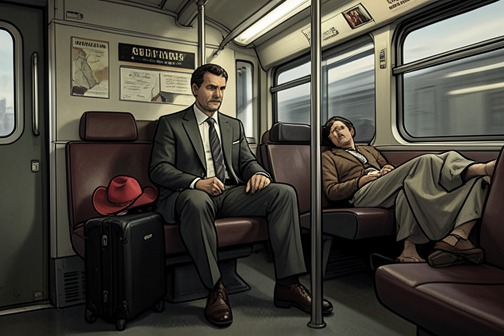
[Nanao's Hidden Suitcase Disappears Aboard the Shinkansen](entity:event-recall-event-nanao-054522a674c3) is the turning point at which [Nanao](entity:character-recall-character-nanao-7c7ef51f63e8)'s carefully concealed [Black Suitcase](entity:object-recall-object-99d1c68cab36) becomes a liability: he cannot retrieve it, cannot safely leave the train, and does not know who has taken it. The disappearance converts a hidden object into an urgent problem of timing and trust. Nanao's fear that the job will go wrong is no longer merely a private worry; when the train reaches [Omiya Station](entity:location-recall-location-omiya-station-39f072999588), he must choose where the search can still succeed.
## Causes and Background
Nanao returns to the first row of car four, having learned from [Maria](entity:character-recall-character-maria-de0c38967fe7) that the bag's owner is in car three. He dislikes being so close, but the whole train feels too close, and sitting in his assigned seat seems the simplest course. He thinks of [Tangerine](entity:character-recall-character-tangerine-92552f325c36) and [Lemon](entity:character-recall-character-lemon-6048d05b659f) and wonders whether they are searching for the bag. The thought of their coldness and violence makes the confined train seem more threatening, while the go-between's warning about them gives that fear a source beyond his own imagination.
Nanao considers moving the suitcase nearer to himself, to the trash-receptacle panel in the gangway between cars four and three. He rejects the idea because someone could notice him moving it. Leaving the bag where it is seems safer than drawing attention to it. Yet his effort to reassure himself that everything will work out is undercut by the counterthought that his plans are always disrupted by unforeseen turns, a pattern he connects to his childhood kidnapping on the way home from junior school. His anxiety is therefore tied both to the immediate risk of the suitcase and to a history that has taught him to expect events to escape his control.
The suitcase's concealment depends on the train's interior being more than it appears. The [Prince](entity:character-recall-character-prince-0d58ca27fcd5) tells [Kimura](entity:character-recall-character-kimura-2baaf2a90146) that the trash bin is set into a wall panel that opens, a feature Kimura had not known about. When Kimura points out that carrying a suitcase near their seats would attract notice, the Prince agrees that there is no useful place to hide it there. The secret compartment offers concealment, but it also makes the bag vulnerable to anyone who knows how the panel works and where to look.
## The Hidden Compartment and the Disappearance
The Prince takes Kimura to a gangway farther back and shows him the round protrusion on the wall. At the Prince's direction, Kimura pushes it, pulls, and twists. The panel swings open, revealing the Black Suitcase on the top shelf. Kimura is surprised by the compartment and reaches inside to lift out the bag; the Prince closes the panel neatly afterward. This recovery makes clear that the suitcase has not simply been misplaced: the hidden storage Nanao relied on has been located, and the Prince and Kimura now have the bag in hand.
The Prince also turns the search into a psychological taunt. Near the toilet door, he knocks once and tells the unseen searcher that the bag had been there all along and that the searcher had walked past it. The remark frames the missing suitcase as a test Nanao has already failed, although the account does not establish whether the Prince's statement is a literal description of where the bag was or a deliberate provocation. Its placement beside the approach of Omiya sharpens the pressure: Nanao is running out of time to decide whether to leave the train.
When Nanao speaks with Maria, he reports that the bag is gone and that he could not get off. Maria asks whether he had hidden it; Nanao confirms that he had, but says it has now disappeared. The exchange establishes the immediate reversal plainly. His concealment had been meant to preserve the job and keep the suitcase from notice; instead, the missing bag prevents him from completing the planned exit at Omiya Station.
## The Choice at Omiya Station
Maria reasons through the problem rather than treating the loss as an isolated mishap. If someone took the suitcase, that person may still be aboard or may have left at Omiya Station. Nanao had faced the same two possibilities as the train arrived and had to choose between getting off to search and staying aboard to look for the bag. Neither option offered certainty, and the decision had to be made before he knew which possibility was true.
Nanao stays on the Shinkansen because the train gives him a better, if still limited, chance of recovering the suitcase. If the thief has left, the person could board another train or disappear into the streets, leaving Nanao with little chance of finding them. If the thief remains aboard, however, the train temporarily restricts their ability to get away. Nanao can search through the carriages and may be able to catch them. This calculation does not make the choice safe; it only makes remaining aboard the option with slightly better odds.
Practical self-preservation is not his only consideration. Remaining on the train also lets Nanao claim that he is still working on the assignment if [Minegishi](entity:character-recall-character-minegishi-c0247f8417a0) checks in. Maria could say that Nanao is aboard and still trying to recover the suitcase. He hopes this will protect his position, but his reasoning exposes how narrow that protection is: he is trying to preserve the appearance of progress at the same time as he confronts the possibility that the job has already escaped his control.
Nanao does briefly step onto the platform to look for anyone running off with the bag. He is prepared to chase a likely suspect, but the length of the train and the curve of the platform prevent him from seeing all the way to the front. He swivels his head back and forth, watching as best he can, then remains aboard. The gesture shows that staying on the train is not passive resignation; he tests the alternative, finds his view inadequate, and returns to the search that still seems possible.
## Consequences and Narrative Significance
The disappearance changes the suitcase from a concealed object into the center of competing searches. Nanao's original concern was that moving it might expose him. Now the hidden compartment has been opened by the Prince and Kimura, while Nanao is still trying to work out whether the person who took it is aboard or has escaped at Omiya Station. The train's narrow, connected spaces make concealment and pursuit part of the same problem: a wall can hide a suitcase, but the person who knows its mechanism can turn that hiding place into a point of access.
The episode also gives concrete form to Nanao's conviction that his life is governed by bad luck. He anticipates unforeseen complications even while trying to reassure himself, and the disappearance immediately turns his planned exit into a forced decision under uncertainty. Yet he does not simply surrender to that expectation. He weighs the routes, makes a choice based on the relative chance of recovering the bag, and scans the platform before committing to remain. The result is an unresolved pursuit: the suitcase is missing from Nanao's control, the identity and location of its taker remain uncertain to him, and the train carries him onward with the search still open.
Event 14
Prince Opens the Suitcase and Takes the Bank Card
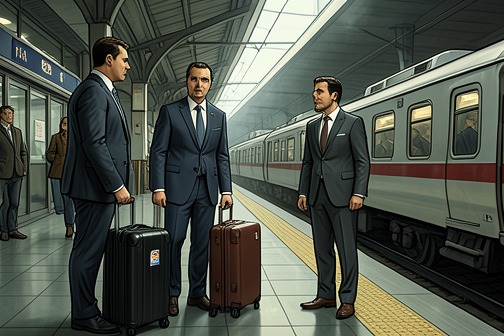
The [Prince](entity:character-recall-character-prince-0d58ca27fcd5)’s opening of the suitcase turns a stolen bag into an instrument of leverage: once he learns what it contains, he takes the five debit cards but plans to put the cash-filled case back into circulation. The episode also exposes [Kimura](entity:character-recall-character-kimura-2baaf2a90146)’s impulsive response to money and the Prince’s preference for studying how people behave over simply possessing what they want.
## The plan and the constrained setting
The suitcase has already become more than cargo. [Nanao](entity:character-recall-character-nanao-7c7ef51f63e8) has retrieved a mid-sized, hard-sided black case with wheels and a sticker by its handle from the Shinkansen’s luggage storage, moving it quietly through the train as [Ueno Station](entity:location-recall-location-ueno-station-518512ec2f76) approaches. Earlier, at [Tokyo Station](entity:location-recall-location-tokyo-station-f824d5350286), passengers had poured off the arriving train and then automatically re-formed orderly boarding lines. Inside the moving train, however, a short interval and a narrow sequence of cars give the people seeking the case little room to act without being seen. The suitcase’s movement among passengers and compartments makes its whereabouts uncertain even as the train carries everyone toward the next stop.
The Prince sees that uncertainty as useful. He first considers the bag something he can conceal and use to influence the people who want it. He also wants to know what is inside, and reasons that a four-digit combination lock can be defeated by trying different combinations. Rather than attempt that himself, he tells Kimura that Kimura will take the suitcase into the bathroom and do the work. Kimura objects to being made to try combinations in a train toilet, but the Prince treats his resistance as another display of how readily the older man loses his composure. The planned opening is thus also an exercise of control: the Prince makes Kimura perform the risky task while he waits to learn what the bag holds.
## The lock opens
The lock clicks at 0600, bringing Kimura’s recollection to an end. The Prince’s luck seems to have delivered the combination quickly despite the many possible four-digit codes. Kimura lifts the suitcase onto the toilet and opens it. Inside are neatly stacked sheaves of used, wrinkled 10,000-yen notes. The money is substantial in appearance but does not impress Kimura, who has transported much larger sums in the past.
The cash is not the only contents. Kimura notices several cards held in the suitcase’s webbing and pulls them out: five debit cards, each issued by a different bank, with a PIN written on the back in permanent marker. He reads them as an additional means of payment, a practical supplement to the cash. The discovery changes the value of the bag for the Prince as well. It is not merely a hidden purse of banknotes; the cards offer access to separate accounts, while their written PINs make them immediately usable to whoever possesses them.
Before closing the suitcase, Kimura gives in to a sudden impulse. He peels off one 10,000-yen note, remarks that nobody is likely to miss it, and tears the note into pieces. He has wanted to try destroying money in this way. After closing the bag and moving it off the toilet, he throws the shreds into the bowl and activates the water by waving his hand in front of the sensor. The gesture is private, unnecessary to opening the case, and revealing: faced with a stack of cash, Kimura does not take it for ordinary use but destroys a single note to satisfy a long-held curiosity.
## The Prince reads Kimura
When Kimura leaves the bathroom, the Prince is waiting. He asks for the combination, and Kimura wonders how he knew the case had been opened. The Prince reads his agitated expression and points out that he has neither the look of surprise nor the happiness expected of someone newly confronted with a fortune. Kimura confirms that the combination was 0600 and says he has locked the suitcase again. The combination’s successful discovery is therefore followed not by an escape from the situation but by a return to the Prince’s control.
The Prince then takes Kimura back to their seats. There, he makes him sit by the window and re-secures his hands and feet with bands and tape. With Kimura bound, he places the suitcase at his feet and opens it again. The cash does not interest Kimura much; he says the debit cards are the unusual part. The Prince examines the five cards and their four-digit PINs, inferring that the numbers are meant to authorize withdrawals. Kimura considers the inconvenience of having two forms of payment and doubts that a withdrawal would let the bag’s owner track them through the police, since the people involved are not making an ordinary living and likely have arrangements among themselves.
As he thumbs through the banknotes, the Prince guesses that Kimura tore up one of them and flushed it down the toilet. Kimura’s face stiffens; when the Prince presses the point, the blood drains from his face. The Prince’s inference confirms that he has been watching not just the suitcase but Kimura’s character. Kimura begins moving his bound hands and feet, but the opportunity to resist has passed. The ripped note, which Kimura treated as a private experiment, has become evidence the Prince can use to unsettle him.
## Taking the cards, returning the case
The Prince dials the lock back to 0600 and opens the suitcase once more. He removes the five debit cards, puts them in his pocket, then closes and locks the case. Kimura taunts him about wanting the money, suggesting that the Prince’s parents must give him little allowance. The Prince ignores the provocation. He says he intends to put the bag back where it was, in the compartment over the garbage bin, or perhaps somewhere easier to find, such as the luggage rack. The evidence establishes this as his stated plan; it does not establish that the return has yet taken place.
His reason is not to restore what was stolen. Having learned what the case contains, he no longer cares about keeping it. He expects that the people who want it will fight over it, and the missing debit cards will create further problems for someone later. He leaves with the locked suitcase, wheeling it behind him, while Kimura remains bound. The apparent prize is divided: the cash stays in the case, but the cards that could unlock access to the bank accounts are now in the Prince’s possession.
The episode’s reversal lies in that selective theft. The Prince first treats the suitcase as leverage because its contents are unknown; once the contents are revealed, he takes what may produce consequences beyond the train and relinquishes his claim to the bag itself. The 0600 combination, Kimura’s destroyed banknote, and the five marked cards each expose a different kind of access: the lock gives entry to the case, Kimura’s impulse gives the Prince insight into his captive, and the PINs turn possession of the cards into potential withdrawals. By choosing to return the suitcase rather than simply keep it, the Prince keeps the conflict alive for the other people pursuing it.
Event 15
Nanao Knocks Out Lemon and Evades Tangerine
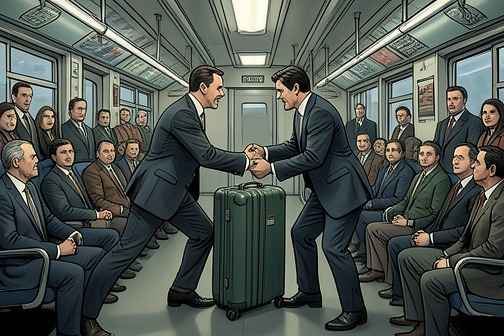
[Nanao](entity:character-recall-character-nanao-7c7ef51f63e8)’s attempt to make common cause with [Lemon](entity:character-recall-character-lemon-6048d05b659f) becomes a fight aboard the Shinkansen, and his victory over Lemon is only the beginning of an escape from [Tangerine](entity:character-recall-character-tangerine-92552f325c36). The episode turns on Nanao’s ability to act under pressure: each improvised delay buys him a little time, but also leaves clues that his pursuer must interpret.
## Background and Encounter
Nanao understands that Tangerine and Lemon were transporting the suitcase for [Minegishi](entity:character-recall-character-minegishi-c0247f8417a0), who also hired Nanao to steal it. He reasons that both sides ultimately answer to the same client and hopes that telling Lemon this will make a temporary alliance possible. The proposal is not yet made when Nanao rises from his seat and finds Lemon standing directly in front of him. Lemon greets him as though they were old acquaintances, then attacks before Nanao can respond.
Nanao ducks and catches Lemon’s wrist, trying to keep the struggle contained. A public commotion could bring police or reporters into the matter and make it harder to conceal his failure from Minegishi; he also wants to preserve the possibility of cooperation with Tangerine and Lemon rather than turn them into enemies. Lemon avoids drawing attention as well, and slips out of Nanao’s hold. They sit across the empty middle seat and exchange blows in the cramped rows, neither accustomed to this kind of fight. The confined space makes a clean attack difficult, while the need to stay inconspicuous shapes Nanao’s choices from the outset.
## The Fight and Its Reversal
Lemon slips out of Nanao’s hold, and they continue the struggle across the empty seat between them. The cramped arrangement makes it difficult to land a clean blow. When Lemon’s fist meets the lowered armrest instead of Nanao, Nanao briefly gains confidence, only to notice that Lemon has produced a small knife. Nanao uses a magazine as a makeshift shield; the blade cuts through its photographs, and when he fails to block the next strike in time, it slashes his arm.
Nanao grabs Lemon’s knife hand and knocks the weapon from his grip, then tries to press his advantage. Lemon draws a gun and holds it aimed at Nanao. A shot would attract attention, Nanao points out, but he gets his opening moments later: another Shinkansen rushes past the window, and Nanao casually wonders whether it might be Murdoch. Lemon turns to look without suspicion. Nanao forces the gun hand down and strikes him, knocking him unconscious.
Nanao moves Lemon to a window seat and considers killing him, but decides against it. After killing the [Wolf](entity:character-recall-character-wolf-dce91b915da2), taking another life feels too risky, and he expects that killing Lemon would bring Tangerine’s anger down on him. Instead, he takes Lemon’s gun and phone, leaving the knife behind. The victory is therefore limited: Nanao has removed one pursuer from the immediate struggle, but Tangerine remains on the train, and Nanao still needs to avoid turning the pair into lasting enemies.
## Improvised Delays and the Pursuit
With Lemon unconscious, Nanao has only a short lead. He takes Lemon’s gun and phone but leaves the knife, then tends to his own cut with first-aid cream. His arm aches from the struggle, and he knows Tangerine may return at any moment. The gun gives him a means of defense, but killing Lemon would risk turning Tangerine into a more determined enemy; Nanao’s immediate objective is to get away without making the conflict worse.
Instead of choosing a direction and simply running, Nanao seeds the train with possible delays. He sets two digital watches to alarm at maximum volume, ten minutes apart, and hides one beneath Lemon’s seat and the other on the luggage rack above him. He also finds a half-empty water bottle and mixes in water-soluble sleeping medicine, leaving it where Lemon might drink it. None of these measures is certain to work: Nanao cannot know whether the alarms will distract anyone or whether Lemon will take the bottle. They are attempts to create options while time is running out.
Before leaving car three, Nanao checks a motionless passenger and finds no pulse. He cannot identify the man, but the discovery adds another unexplained death to a carriage already marked by [Little Minegishi](entity:character-recall-character-little-minegishi-28bc1d9bda18)’s body. Nanao nevertheless hurries toward car two. When Tangerine returns, he finds Lemon unconscious, confirms that he is alive, and begins searching for Nanao, reasoning that the younger man most likely went toward the rear of the train.
Tangerine’s search becomes a contest of inference. In car one he encounters an open umbrella on an empty row and spots a low cord tied across the aisle: Nanao has made a tripwire and used the umbrella as a decoy. A wigged passenger turns out to be another false lead. He explains that a young man in black glasses tried to take the wig, then paid him ten thousand yen after he objected. A nearby passenger confirms seeing someone in black glasses leave the umbrella and says he went back toward car two, complicating Tangerine’s belief that Nanao must be farther down the train.
Meanwhile, Nanao reaches the gangway between cars three and two and considers the trash bin where he had hidden the suitcase, but recognizes that a person cannot fit inside it. Panic narrows his attention and disrupts his thinking; within seconds, the rush passes, and he regains the ability to act without hesitation. He enters car two, picks up a bright red cowboy hat beside a sleeping passenger, and places it on the man’s head. Like the umbrella and the tripwire, the gesture is meant to give Tangerine something else to notice. Nanao cannot be sure any decoy will hold his pursuer’s attention, but each one might buy the time he needs to stay ahead.
## Disguise and the Narrowed Search
Tangerine’s search is diverted not only by objects but by people who seem to belong to the ordinary life of the carriage. After a passenger points him back toward car two, the cross-dressed figure he had already stopped reappears from the bathroom and approaches him with disarming calm. The exchange buys Nanao another moment of uncertainty: Tangerine has correctly read the umbrella as a decoy and knows Nanao is somewhere nearby, yet his attention keeps being pulled toward apparent clues that lead nowhere. The scene’s shift between pursuer and fugitive makes the escape less a matter of vanishing than of controlling what Tangerine sees. Nanao cannot know which distraction will work, but his quick improvisations keep the search from becoming a direct confrontation.
Event 16
Nanao Escapes Tangerine's Pursuit
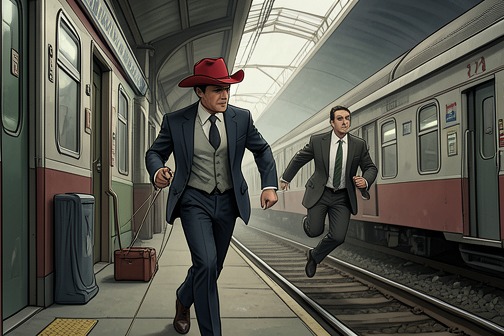
[Nanao Escapes Tangerine's Pursuit](entity:event-recall-event-nanao-tangerine-36ba1682f1e2) is an improvised escape through the train cars, in which [Nanao](entity:character-recall-character-nanao-7c7ef51f63e8) uses a red cowboy hat, an umbrella, a tripwire, and a borrowed disguise to delay [Tangerine](entity:character-recall-character-tangerine-92552f325c36) before slipping past [Lemon](entity:character-recall-character-lemon-6048d05b659f). Its decisive turn is not a clean victory over either pursuer but a brief opening created by attention diverted elsewhere: while Lemon searches for the source of an alarm, Nanao runs past him and onward through the train.
## Improvisation in the Passenger Cars
Nanao's plan begins under acute pressure. His vision narrows, his pulse quickens, and his thoughts surge into a disorienting flood. In a few seconds, that mental rush passes; he feels renewed, and his field of vision opens. He acts without pausing to settle on a complete plan. The sequence that follows grows from that quickened, practical attention: anything in the train might become useful if it buys him time.
In car two, Nanao spots a sleeping, middle-aged passenger with salt-and-pepper hair. A striking fire-engine-red cowboy hat sits beside the man. Nanao places it on his head without waking him, making an unexplained change that might catch Tangerine's attention. He cannot know whether Tangerine will stop to investigate, but even a small delay could improve Nanao's chance of surviving. The hat is less a reliable trap than an invitation to look twice.
Moving toward the gangway, Nanao considers taking a battered, sticker-covered suitcase from a luggage rack, but its weight makes it impractical. In car one he finds a compact umbrella overhead, opens it with a sharp pop, and sets it several rows away. Then he stretches vinyl packing string across the aisle, securing it beneath seats and tying it to an armrest so that it forms a tripwire. He steps over the line cautiously, aware that he could be caught by his own hastily made device. The umbrella and wire do not guarantee an escape; their purpose is to make Tangerine notice, assess, and lose time.
## The Disguise and Its Cost
Nanao next returns to car two, where he recognizes a shopping bag he had seen on the platform in [Tokyo](entity:location-recall-location-tokyo-0b4edfa3fe2f). It contains a conspicuous red jacket, a wig, and a dress. Rather than wear the jacket, which would attract attention, he takes the wig. The bag belongs to two passengers, a cross-dresser reading a tabloid and a bearded man occupied with his phone. When they object to Nanao taking their belongings, he abandons his usual polite manner and threatens the bearded man to force cooperation. His urgency turns strangers into unwilling participants in the escape.
Nanao releases the bearded man, puts the wig on his head, and instructs him to go to the back of car one and call out when Tangerine approaches. In giving those directions, Nanao refers to his pursuer as a woman; the pair show no discomfort at the pronoun. The disguise is thus not simply clothing Nanao can put on himself. He makes another passenger into a decoy, relying on Tangerine to read the wig and the passenger's presence as a reason to investigate.
That plan depends on several uncertain reactions. Nanao imagines Tangerine examining the umbrella and noticing the tripwire, then continuing farther into car one because the obstacles suggest that Nanao went that way. He also bets that Tangerine will check the toilets but will discount one after seeing the cross-dresser enter it. Meanwhile, the bearded man must follow instructions. The cross-dresser's bag begins to vibrate with an incoming call, then falls silent. Nanao takes the interruption as an opening, pays the man two 10,000-yen notes, and hands over the phone he took from [Wolf](entity:character-recall-character-wolf-dce91b915da2). The cross-dresser turns toward car one; Nanao moves in the opposite direction. The separation gives him a chance to break the pattern of pursuit, though it does not establish that Tangerine has been permanently misled.
## A Door Opens, a Trap Fails
Later, after dodging Tangerine in the gangway between cars one and two, Nanao reaches the entrance to car three. He tries to look through the door window, but trips its sensor; the door slides open and exposes his movement. He reads the mishap as another instance of his bad luck. Rather than resist the opening or retreat, he accepts the immediate direction of events and slips inside, sitting quietly in the empty first row to stay out of sight.
From there he sees Lemon standing in the car. The sleeping-powder trap has failed: Lemon did not drink from the bottle, so he is still alert. Nanao had not counted on that device working, but its failure narrows his options and leaves him waiting for another chance. An alarm continues to beep urgently. Nanao bets that Lemon will investigate it, and Lemon does: he stands, moves a row back, and crouches to search the floor. The noise that might have exposed Nanao instead draws Lemon away from the aisle.
Nanao moves at that precise moment. He goes directly up the aisle with controlled haste while Lemon is occupied, holding his breath as he passes. Only after reaching the gangway does he exhale. The action is a small, sharply timed crossing from concealment into motion: he does not overpower Lemon or settle the danger, but uses the distance created by the alarm before either pursuer can close it again.
## A Temporary Escape
Nanao continues through cars four and five. Once outside car five, he takes out his phone and searches its contacts for the number he has just entered: Wolf's phone. He calls while leaning against the gangway window, listening over the train's roar for the line to connect. The pursuit has carried him away from the immediate danger in car three, but the call shows that escape is also a movement toward the next step in his plan, not a moment of safety detached from the larger crisis.
The episode's pattern is one of provisional advantage. A hat, an umbrella, a tripwire, a wig, a payment, a borrowed phone, and an alarm each create only a possible delay; Nanao survives by combining them and acting when another person's attention shifts. The failed powder and the sensor-triggered door preserve the threat of bad luck, while his quick adjustment prevents either setback from ending the escape. His success is therefore real but limited: he gets past Lemon and keeps moving, with Tangerine still the pursuer and the train itself an unstable field of obstacles and opportunities.
Event 17
Minegishi's Son Dies Aboard the Train
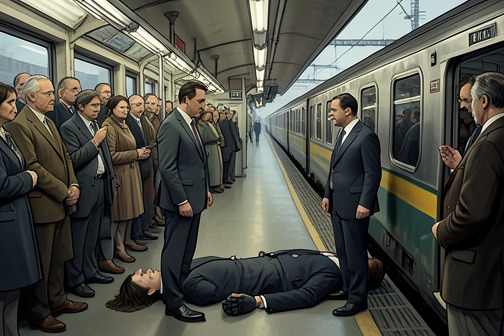
[Minegishi](entity:character-recall-character-minegishi-c0247f8417a0)’s son dies aboard the train before [Nanao](entity:character-recall-character-nanao-7c7ef51f63e8) learns who he is. [Tangerine](entity:character-recall-character-tangerine-92552f325c36)’s confirmation changes the significance of the body Nanao has already seen: the death is no longer an unexplained presence among the passengers but a loss that may bring Minegishi into the unfolding conflict. Nanao’s later suspicion that [Hornet](entity:character-recall-character-hornet-2ac6c7f226f1) poisoned the young man offers a possible explanation, not a confirmed account of how he died.
## Background and Identification
Nanao has previously noticed a young man’s body beside Tangerine and [Lemon](entity:character-recall-character-lemon-6048d05b659f). It is plainly lifeless, but Nanao does not yet know whose son he is. He recalls having heard something about the death while spying on a conversation earlier; the information had not settled into a certainty. When Tangerine tells him that Minegishi’s son is with them and is dead, Nanao connects the disclosure to the body he saw. The confirmation makes an already visible death newly consequential.
The conversation identifies the deceased through his relationship to Minegishi, rather than through any account of his life or the circumstances that brought him aboard. The evidence establishes that he is Minegishi’s son, that he is traveling with Tangerine and Lemon, and that he is dead. It supplies no name for him and no fuller personal history. This limited identification is important: in the scene, the fact that he is Minegishi’s child carries immediate weight, while his own identity remains largely unknown.
## Nanao Recognizes the Stakes
Nanao’s first response is shock and an attempt to take in what Tangerine has said. His question about what “dead” means is not a request for a detailed explanation: he remembers seeing the body and recognizes that it was not breathing or moving. The revelation instead forces him to understand whose death he has witnessed. His brief, uncertain reaction gives way to alarm about what the news could mean for Minegishi and for the people aboard the train.
Nanao reasons that the loss of a child could overwhelm a parent with grief, regardless of the parent’s character. If Minegishi were to learn who was responsible, Nanao believes that grief could become rage. The passage presents this as Nanao’s fearful anticipation, not as evidence that Minegishi has yet discovered the death or acted in response. Nevertheless, naming the dead young man as Minegishi’s son transforms the death into a threat with consequences beyond the immediate scene: the possibility of Minegishi’s reaction now hangs over the train’s other conflicts.
## Suspected Cause and the Hornet
Later, when Nanao asks what he gets for a correct answer, Tangerine replies that he gets the killer. Nanao’s proposal leads Tangerine to consider whether Hornet is aboard the train. Nanao suspects that Hornet may have poisoned Minegishi’s son, reasoning that this could account for the absence of visible wounds. The exchange introduces a possible cause and a possible perpetrator, but neither is established as fact in the account.
Tangerine explains the method attributed to Hornet by rumor: needles supposedly trigger anaphylaxis, with an initial prick activating the immune system and a second causing a fatal reaction. The detail gives Nanao’s suspicion a plausible mechanism within the characters’ discussion, but it remains reported information about Hornet’s method, not forensic confirmation that this is what happened to Minegishi’s son. The distinction matters: the death is confirmed, while its cause and responsibility remain under investigation.
## Consequences and Significance
The suspicion becomes more immediate when Nanao later finds that a needle has lodged in his hand after a woman throws it and it bends against a door. Nanao recognizes it as poisoned and thinks of Hornet. This later incident does not prove that the same method killed Minegishi’s son, nor does it identify the woman as responsible for the earlier death. It does, however, place the poison-needle possibility in the present tense: the suspected means of the young man’s death may also threaten Nanao.
The event’s decisive turn is therefore the movement from an unidentified body to a death linked to Minegishi, followed by a still-unverified theory about Hornet. The confirmation gives Nanao a reason to fear Minegishi’s response; the subsequent discussion gives him a possible explanation for the death; and the needle in his own hand makes that explanation personally urgent. The account leaves the young man’s precise cause of death unresolved, preserving the difference between what Nanao and Tangerine know, what they suspect, and what they have not yet proved.
Event 18
Nanao's Fight with Hornet
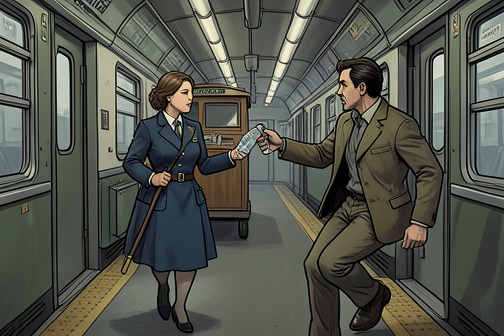
[Nanao](entity:character-recall-character-nanao-7c7ef51f63e8)'s fight with [Hornet](entity:character-recall-character-hornet-2ac6c7f226f1) begins with a revelation that transforms an ordinary encounter aboard the train into a test of survival: the snack-trolley attendant, whose appearance gives no obvious sign of danger, is the assassin [Tangerine](entity:character-recall-character-tangerine-92552f325c36) has identified.
## Discovery and Approach
Tangerine alerts Nanao that the woman pushing the snack trolley is Hornet. The news catches him off guard. When the trolley stops, the attendant looks back at him with a natural, helpful expression; wearing her staff uniform beneath a vending apron, she appears entirely plausible in her role. Nanao studies her but cannot reconcile her ordinary presentation with the warning. He ends the call and watches her as she slowly turns to face him, asking whether anything is wrong. Later, as Nanao pretends to return to the green car, he tries to detect movement behind him and raises a plastic bottle to use its liquid as a makeshift mirror. In its wavering reflection, he sees the woman silently coming closer. He turns, and the encounter becomes an open fight.
## The Fight in the Gangway
Nanao turns on the approaching attendant and throws his plastic bottle at her face. She evades it, but he uses the opening to shove her into the trolley, sending paper cups and souvenir-snack boxes across the gangway. A snake that had been concealed among the boxes slips away along the wall, briefly recalling the one Nanao had seen escape its terrarium elsewhere on the train. The attendant gets back up with a needle in her hand and advances without hesitation; her uniform and apron do not hinder her movement.
Nanao opens the wheelchair-accessible toilet and tries to force Hornet inside, following her into the cramped space. She deflects his first punch and avoids the next, demonstrating that she can handle his attacks. When the automatic door begins to close, he reopens it and retreats into the gangway. His injured arm, previously stabbed by [Lemon](entity:character-recall-character-lemon-6048d05b659f), complicates his attempt to regain his footing. The gun he took from Lemon falls from his belt, and as Nanao reaches for it, Hornet throws a needle that strikes the door. She steps out, kicks the gun beyond his reach, and presses her attack.
With the refreshments scattered around them, Nanao picks up a gift-wrapped snack box and holds it between himself and Hornet. She thrusts a needle through it, then draws back and attacks again; the box gives him a makeshift barrier while leaving him little room to recover. During the struggle, he falls. At first he treats the mishap as another instance of the bad luck he associates with himself, but when he tries to get up, he discovers that one of Hornet’s needles has caught in his hand. Its bent point has turned upward after striking the door, and he recognizes that it is poisoned.
The sudden danger briefly overwhelms Nanao, but his attention clears and he acts. He pulls the needle out and moves toward Hornet, who is still recovering and reaching for the dropped gun. Nanao takes the weapon and one of the needles from the floor, then uses Hornet’s own weapon against her. As she reaches for a pen-shaped injector in her apron, he stops her and takes the device.
## Countermeasure and Concealment
Nanao takes the injector from Hornet and uses it on himself, pressing it against his exposed thigh after tearing open the fabric of his cargo pants. He does not know whether the device contains an antidote, whether he is using it correctly, or whether he has acted in time. The injection offers no immediate certainty: as he stands, his heart seems to beat unusually hard, though he cannot tell whether that is a physical effect or fear.
He then carries Hornet into the multi-purpose room and positions her against the wall so that her extended legs keep the door from opening fully. From the corridor, he sets the placard to indicate that the room is occupied. His intention is practical concealment: a passenger who finds the door difficult to open may assume that the room is in use or out of order rather than investigate.
Before moving on, Nanao restores the refreshments to the trolley and pushes it into a corner of the gangway. The scattered cups and snack boxes had marked the struggle; putting them back is an attempt to erase its visible trace. The encounter thus ends not with any assurance that the poison has been neutralized, but with Nanao hiding Hornet and restoring the ordinary appearance of the train around them.
## Outcome and Reversal
The fight ends with Hornet dead and Nanao still uncertain whether the injector has countered the poison. His survival therefore remains unresolved at the moment he conceals her: he has stopped the immediate attack, but cannot know whether his improvised response has worked. The reversal is stark. The apparently ordinary attendant, whose concealed weapon had turned the train corridor into a trap, is defeated by the same poison needle she used against him; Nanao’s escape depends not on certainty, but on acting while certainty is impossible.
Event 19
Prince's Manipulation and Needle Torture of Kimura
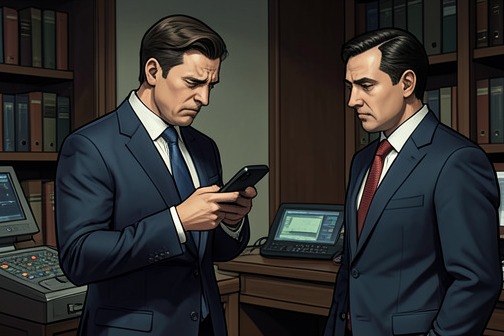
The [Prince](entity:character-recall-character-prince-0d58ca27fcd5)’s manipulation and needle torture of [Kimura](entity:character-recall-character-kimura-2baaf2a90146) turn a staged test of family loyalty into a contest over obedience, with [Wataru](entity:character-recall-character-wataru-5eead922f744)’s safety used to constrain Kimura even when he resists. The scene exposes the Prince’s method: he scripts the choices available to another person, treats compliance as proof of his authority, and makes the threat of further harm reach beyond his immediate captive.
## The call becomes a test
The episode begins when the Prince notices Kimura’s phone still buzzing and proposes a game. He tells Kimura to answer his father’s call and ask for help, but insists that Kimura must not mention Wataru. The distinction is central to the trap: Kimura is to present himself as a man being held, while the person whose safety matters most to him must remain unspoken. The Prince expects the grandfather to soften if he believes something has happened to Wataru, and therefore forbids Kimura from using that concern to make his appeal persuasive.
Kimura accepts the call under pressure. His father’s first question is about Wataru, and Kimura says that his son is fine before trying to explain that he needs help. The father does not readily believe him. He questions why anyone would hold Kimura on a train, wonders whether the story is true, and reasons that a genuine captor would not have let him answer the phone. His skepticism frustrates the appeal, but the exchange also shows that Kimura cannot simply disclose the danger without risking the consequence the Prince has threatened.
The Prince then takes over the conversation. Speaking politely, he identifies himself as sitting beside Kimura. The father responds by asking the Prince to keep an eye on Kimura and to stop him if he seems likely to drink. The request introduces a personal history between father and son without resolving it; within the scene, however, it gives the Prince a way to present himself as the reasonable person in the conversation. After ending the call, he declares that Kimura has lost the game. The rules were set by the Prince, and the outcome is made to appear as if Kimura’s failure rather than the rigged test has authorized what follows.
## Pain as punishment and leverage
The Prince produces a sewing needle and frames its use as the penalty for losing. His explanation is not merely that pain will punish Kimura: he understands the imposed rules as a way of establishing their difference in status. A small object, easy to conceal compared with an electric shock, becomes an instrument for enforcing that arrangement in the confined setting of the train. The Prince proceeds with the punishment while telling Kimura to remain quiet, making silence another demand attached to the threat.
The danger extends beyond Kimura. When Kimura appears close to protesting, the Prince warns that Wataru will suffer if Kimura makes noise again, and says that he will make the call himself. Kimura’s anger gives way to restraint when he recalls that the Prince does not bluff. He clenches his jaw and braces himself rather than risk provoking retaliation against his son. The episode thus makes the threat effective before any further action against Wataru occurs: the Prince’s power lies partly in Kimura’s expectation that disobedience will be transferred onto someone he loves.
The Prince’s private reasoning clarifies how he reads this submission. Each order obeyed, he believes, pushes a person lower in a hierarchy, making later obedience easier and recovery of independence harder. That idea connects the private encounter to his broader rule over the schoolkids. Earlier, Kimura had recognized the students’ passivity through the concept of learned helplessness: repeated shocks and suffering had taught them to expect that resistance would not help. Their fear also made them distrust one another, as students turned suspicion and resentment toward people who might otherwise have been allies. The train scene applies a related logic directly to Kimura, though here the Prince uses the threat to Wataru to keep resistance costly.
## Kimura breaks the script
Kimura eventually cannot endure the punishment in silence. He drives his knee and elbow into the Prince’s head, knocking the needle from his hand. The action is a sudden interruption of the game’s structure: Kimura stops following the Prince’s instructions and physically disrupts the procedure the Prince had presented as inevitable. His reaction combines triumph with horror at what he has done, suggesting that the blow is both a moment of resistance and a frightening escalation for him.
The Prince does not respond with an immediate loss of composure. He mocks Kimura’s reaction as evidence that the punishment hurt too much, then presents himself as patient and controlled. More pointedly, he says that someone less restrained might already have sent a killer after Wataru. The claim turns the Prince’s calmness into another form of intimidation: Kimura has interrupted the immediate assault, but the boy’s safety remains subject to the Prince’s decision. Kimura exhales and appears unsure what to do next, leaving the confrontation unresolved rather than converting his blow into a clear escape.
## Power beyond the immediate encounter
The scene’s central reversal is limited but consequential. The Prince initially controls the call, the rules, and the penalty; Kimura’s strike breaks that sequence for a moment. Yet the Prince restores pressure by shifting attention from his own injury to the possible danger facing Wataru. The father’s skepticism has already deprived Kimura of the help he sought, while the Prince’s threat makes open resistance appear capable of endangering his son. The result is not a simple contest of physical strength but a struggle over who can define the consequences of each action.
Read beside Kimura’s earlier reflections on learned helplessness, the episode distinguishes visible force from the expectation of force. The schoolkids’ fear had become a shared condition that weakened trust and discouraged rebellion; Kimura, by contrast, does act, but the Prince’s leverage over Wataru immediately narrows what that action can achieve. The needle, the phone call, and the prohibition on mentioning Wataru all serve the same coercive design: to make Kimura experience each available choice as already governed by the Prince. Kimura’s strike exposes a limit to that control, while the threatened retaliation shows how quickly the Prince tries to reassert it.
Event 20
Kimura Is Shot by Lemon Aboard the Train
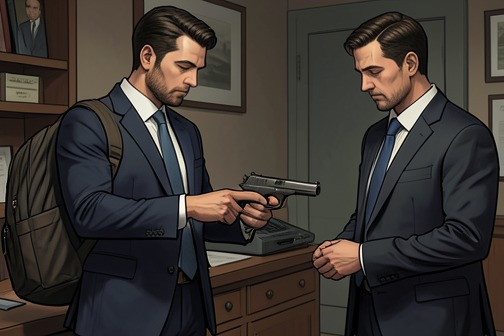
[Lemon](entity:character-recall-character-lemon-6048d05b659f)’s shooting of [Kimura](entity:character-recall-character-kimura-2baaf2a90146) aboard the Shinkansen is the moment a tense, unstable partnership becomes a direct threat to Kimura’s life. The scene turns on a reversal: a gun that Kimura did not know was in the [Prince](entity:character-recall-character-prince-0d58ca27fcd5)’s backpack becomes Lemon’s means of deciding which of them will survive, while Kimura’s resolve to live for [Wataru](entity:character-recall-character-wataru-5eead922f744) is answered not by escape but by a nearly inaudible shot.
## The search and the hidden weapon
Before Lemon acts, Kimura is already unsure what the Prince intends. He wonders whether the Prince expects him to take the gun and confront Lemon, or whether the Prince is simply manipulating him. His thoughts divide between caution and an impulse to act, leaving him unable to trust either his own judgment or the Prince’s apparent position. The uncertainty matters because the next turn arrives before Kimura can settle on a plan.
Lemon adopts the manner of someone inspecting baggage and takes the Prince’s backpack. The Prince, like Kimura, appears surprised by the sudden move. When Lemon opens the bag, he finds a handgun with a silencer attached. Kimura can only stare as Lemon recognizes that the silencer solves a practical problem: firing an ordinary gun inside a train would draw attention, but this weapon can be used far more quietly. The backpack has changed from an object in the Prince’s possession into the source of Lemon’s advantage.
## Lemon’s test
Lemon aims the gun at Kimura and asks whether he and the Prince work for [Minegishi](entity:character-recall-character-minegishi-c0247f8417a0). He explains that he intends to shoot one of them, not both: [Tangerine](entity:character-recall-character-tangerine-92552f325c36) would object if Lemon killed someone who might provide information. At the same time, Lemon says that leaving both alive would be too dangerous. His explanation places the threat within the pair’s working relationship. Tangerine’s expected disapproval limits Lemon’s choices, but does not make either captive safe.
Instead of choosing immediately, Lemon makes the two identify which of them is the leader. On his count, the leader must raise a hand while the other points to the leader. If their answers do not match the required pattern, Lemon says he will shoot them both. The test gives the appearance of a rule-bound decision, but Lemon controls both its terms and its consequences. Kimura tries to invoke Lemon’s earlier concern about getting into trouble if he kills them both; the threat remains in force.
A boy and his mother pass through the carriage doorway as Kimura repeats to himself that he must live and get out for Wataru’s sake. Their departure briefly marks the boundary between ordinary passengers and the danger unfolding nearby. When Lemon counts, Kimura raises his hand. The Prince points at Kimura, identifying him as the leader. Their gestures converge on Kimura, and Lemon has the answer he demanded.
## The shot
A hand dryer is blowing in the curtained sink area beside them. Its steady noise draws Kimura’s attention to the possibility that someone has been there throughout the confrontation. Then the silenced gun fires. Kimura initially fails to recognize the quiet mechanical sound as a gunshot; only when he notices warmth spreading across his chest does he understand that he has been hit. The dryer’s noise and the weapon’s silencer have made the violence difficult to hear even for the person it strikes.
Lemon remains smiling and tells Kimura there are no hard feelings, then treats the matter as settled. Kimura loses sight of the scene, feels the train’s rumble, and passes into darkness as his mind gives way. The contrast is stark: Lemon’s casual manner makes the shooting sound like the completion of a task, while Kimura’s awareness narrows to bodily sensation, the Shinkansen’s motion, and a loss of orientation. The scene does not present the shot as an open exchange or a fair contest; Kimura is disarmed of control before he can act.
## Confinement and consequences
Kimura is not dead immediately. Lemon and the Prince put his barely breathing body inside the bathroom and secure the door from outside. Lemon uses a thin copper wire to manipulate the lock, tugging it as the door closes. The first attempt fails; the second makes the lock click. A short length of wire remains protruding from the frame, an improvised device that Lemon says he can use to reopen the door by pulling it upward. The escape mechanism is also the mark of Kimura’s confinement.
The Prince asks about the visible wire, and Lemon dismisses the likelihood that anyone will notice or care. Afterward, he takes a drink of mineral water and asks what the Prince whispered to Kimura when they were dragging him into the bathroom. The question leaves the content of the whispered words unresolved in this moment, but shows that the Prince had sought a final private exchange with the dying-seeming man. The shooting therefore does not end the conflict between them; it changes its conditions, with Kimura alive but locked away and the Prince’s intentions still under scrutiny.
The Prince later taunts Kimura by blaming him for Wataru’s possible death. That accusation sharpens the scene’s central reversal: Kimura’s effort to survive for his son is followed by a renewed attempt to make him feel responsible for the danger to Wataru. The episode’s sound pattern reinforces the same reversal. A loud train and a running hand dryer surround a shot so quiet Kimura does not recognize it at once; the machinery that belongs to routine travel helps conceal the moment when his life is put at risk.
Event 21
Prince Kills Lemon
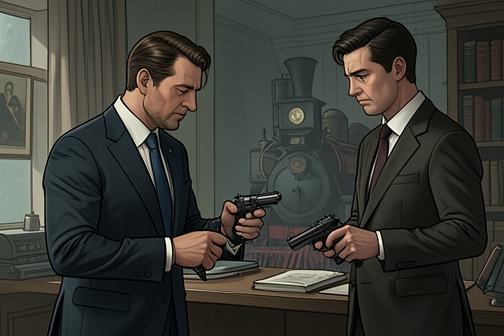
[Prince Kills Lemon](entity:event-recall-event-prince-lemon-262eb9acf2c7) is a turning point in which [Lemon](entity:character-recall-character-lemon-6048d05b659f)’s attempt to control the [Prince](entity:character-recall-character-prince-0d58ca27fcd5) is interrupted by the effects of medication, giving the Prince an opening to seize the gun and later kill him. The scene sets a children’s railway story against an immediate threat, then turns the Prince’s apparent helplessness into an opportunity to act.
## The Story and the Threat
Lemon tells the Prince that Duck, a locomotive on [Sodor Island](entity:location-recall-location-sodor-island-1237a0e705fa), was framed by Diesel as a gossip. In Lemon’s account, the other locomotives believed the accusation and turned against Duck. Lemon delivers the tale with the energy of someone addressing a crowd, and the Prince is drawn into listening. Yet Lemon is also handling a gun: he has removed its silencer and now twists it back into place with practiced, measured movements. The Prince realizes that he did not notice when Lemon retrieved the weapon from the backpack. The familiar story and the careful preparation unfold together, leaving the Prince unable to respond as Lemon finishes preparing the gun and points it at him.
## The Threat Reverses
Lemon draws a lesson from Duck’s story: the locomotive, falsely branded a gossip, refuses to answer his accusers with cowardice. As Lemon finishes, the gun is aimed at the Prince. The contrast between the children’s tale and the danger before him leaves the Prince momentarily unable to act; he watches the weapon and waits for Lemon to fire.
Instead, Lemon’s arm begins to sag. He blinks, touches his face, and yawns, appearing unable to stay alert. The Prince recognizes the signs from a previous occasion when he used strong sleeping medication against a classmate. Lemon admits that he is becoming sleepy, and the Prince takes the opening: he wrests the gun away, evades Lemon’s sluggish attempt to strike him, and retreats as Lemon loses his balance and collapses. The balance of power changes abruptly, not through the Prince’s plan but through the medication’s unexpected effect.
## The Key and the Killing
The Prince notices an ordinary-looking bottle of mineral water beside Lemon and suspects that it may have contained the medicine, though he cannot establish who put it there. His relief at surviving turns into a belief that he is exceptionally lucky. That confidence lasts only until Lemon, despite appearing asleep, suddenly grabs the Prince by the lapel and pulls him down. When Lemon struggles to remain conscious, he gives a message for [Tangerine](entity:character-recall-character-tangerine-92552f325c36): the key Tangerine wants is in a coin locker in [Morioka](entity:location-recall-location-morioka-dfdcde72cab9). Lemon then slumps forward; the Prince can tell that he is still breathing.
A small picture of a green train engine beneath Lemon’s hand makes the Prince wonder whether it is a signal to his partner. He removes it and throws it away, then takes Lemon into the bathroom, where [Kimura](entity:character-recall-character-kimura-2baaf2a90146) is already dead. The Prince shuts and locks the door, places Lemon there, and uses the gun to kill him. He leaves the gun in the bathroom rather than keep it in his backpack, reasoning that its presence there is consistent with the deaths of Kimura and Lemon and would be harder to explain on his person. Before leaving, he uses wire to lock the door from the gangway. The scene thus converts Lemon’s last message into a clue for Tangerine while the Prince tries to make the bathroom, and the weapon, appear separate from his own movements.
## Immediate Aftermath
The killing does not close the scene so much as turn it toward its next connection. After locking the bathroom door from the gangway with wire, the Prince takes Kimura’s phone from his bag and calls the last number in its history. A gruff male voice answers, but the exchange has only begun: the narrative leaves the person on the other end unidentified, carrying the consequences of the bathroom scene beyond the locked door.
Event 22
Failed Suitcase Handover at Sendai Station
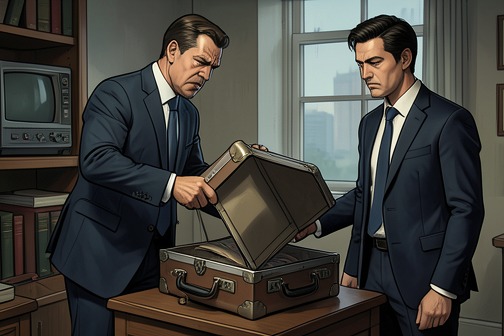
The failed suitcase handover at [Sendai Station](entity:location-recall-location-c93ffc568765) turns [Minegishi](entity:character-recall-character-minegishi-c0247f8417a0)’s attempt to control a transfer into a public exposure of how little control he actually has. [Tangerine](entity:character-recall-character-tangerine-92552f325c36) arrives with the wrong case and [Nanao](entity:character-recall-character-nanao-7c7ef51f63e8), who is not Minegishi’s son, playing the part of the missing boy. The disguise and the suitcase might have carried them through a quick inspection; instead, Nanao’s fumbling with the lock opens the case and reveals its unmistakable contents. The train’s departure saves them from having to answer for the mistake, but leaves their situation unresolved.
## The checkpoint Minegishi arranges
Minegishi tells Tangerine that, to be certain, he is having people check up on him at Sendai Station. The station stop is therefore not a casual meeting: Minegishi has arranged for his son and suitcase to be brought off the train, where several of his men will be waiting on the platform. He has also hired some of Tangerine’s fellow professionals. The handover is meant to make the items and the people involved legible to Minegishi’s network at a particular place and time.
Tangerine recognizes the practical danger in the plan. When Minegishi tells him to get off, he answers that the Shinkansen will not wait long. The next-station melody begins as the exchange is discussed, its light, whimsical sound accompanying the imminence of a tightly timed transfer. For Tangerine, the train’s schedule is not background: it limits how long he can remain on the platform before the train leaves without him.
As the train slows, Tangerine cannot keep his footing and reaches for the wall. He moves through a gangway crowded with passengers waiting to get off, drawing doubtful looks as he passes them. At the luggage rack, he grabs the first black suitcase he sees, a sturdy, oversized case much larger than the one he and [Lemon](entity:character-recall-character-lemon-6048d05b659f) had. The choice supplies him with something to present, but it does not make the luggage genuine.
## A disguise put to the test
Tangerine tells Nanao that they need to get off at [Sendai](entity:location-recall-location-sendai-c2319f52a8f6). He explains that Minegishi’s men are waiting, and that he must go onto the platform with Minegishi’s son and the suitcase so the men can check that he has both. Nanao immediately identifies the central problem: this is a different suitcase, and Nanao is not Minegishi’s son. Tangerine’s answer is to make the boy impersonate Minegishi’s son. As the train pulls into Sendai Station, Nanao begins to look around nervously and asks what to do; Tangerine tells him simply to come along.
On the platform, a conductor watches the unusual gathering from a distance. It does not look like lovers parting or friends seeing one another off, and the conductor seems to judge that it is safer not to approach. The men’s polite manner does not make the encounter ordinary. Nanao understands that the wrong suitcase may be passed off if Tangerine insists it is the right one, but he has no idea how to act like Minegishi’s son. His predicament is not merely a matter of clothing or appearance: he is being asked to perform a relationship he does not have in front of people who may know what Minegishi’s son looks like.
One of the suited men asks to see the inside of the bag. Tangerine says it will not open and turns the request back on them, asking whether they know what is inside and suggesting that they open it. The excuse buys him a moment but also makes the case itself the focus of scrutiny. When the man mentions glasses, Tangerine explains that Nanao looks different from usual. Then the man produces a photograph Minegishi has sent him and holds the phone up beside Nanao’s face. Tangerine insists that the hair and glasses have been changed so no one would recognize him, and moves Nanao back toward the train, presenting the altered appearance as an explanation for the mismatch.
## The lock gives way
The man with the photograph remains unconvinced. He says that Nanao does not really look like the picture, then calls him by an unfamiliar name. Nanao realizes that this may be the name of Minegishi’s son. The suited man remarks that perhaps only Nanao’s father can open the suitcase. Nanao responds with a goofy expression and a nod, saying he has no idea. He tries to make his ignorance convincing, but standing still under the men’s scrutiny leaves him uneasy.
Without thinking it through, Nanao reaches for the case and turns the combination dials. He treats the movement as a way to make his ignorance seem more believable: casually fiddling with the lock, he suggests that it would be convenient if the numbers happened to open it. The gesture is meant to be harmless display, not a serious attempt to discover the combination. Nanao assumes that random turns will not work, least of all for someone who regards himself as unlucky.
The lock opens. Nanao’s rough handling and the momentum of the release send the lid springing back, spilling an avalanche of women’s underwear onto the platform. The suited men freeze, as do the other men gathered there, including a shaved-headed man and two muscular men. The contents make the substitution impossible to explain away: whatever Tangerine has brought, the suitcase full of underwear plainly does not belong to Minegishi.
## The train leaves the exchange behind
The mistake stuns Tangerine as well. Nanao, by contrast, is comparatively calm. The sudden mishap feels to him like another recurrence of the bad luck he expects, a familiar reversal rather than a wholly surprising one. He kicks away from the platform and leaps into the train; Tangerine is swept along after him. The doors slide shut just as they enter the gangway, and the Shinkansen begins to move.
The man who had checked Nanao’s face raises his phone to his ear as the train pulls away. The handover has produced neither the expected confirmation nor a completed transfer: Minegishi’s men have seen the wrong case opened, and Tangerine and Nanao are back aboard the departing train. Nanao asks Tangerine what happens now, while the Shinkansen steadily gathers speed without regard for their agitation. The scene closes on that question rather than an answer, carrying the consequences of the failed deception into the journey ahead.
The suitcase functions first as a credential, something Tangerine is expected to show Minegishi’s men, and then as the object that destroys his cover. Its exterior resemblance to the expected luggage cannot survive the opening lid. Likewise, Nanao’s disguise depends on the men accepting Tangerine’s explanation for the altered face; the photograph turns that performance into a direct comparison. The accidental opening collapses both acts of substitution at once, and the departing train offers escape from the platform without resolving what the failure will mean for Tangerine or Nanao.
Event 23
Wataru Kimura's Rooftop Fall
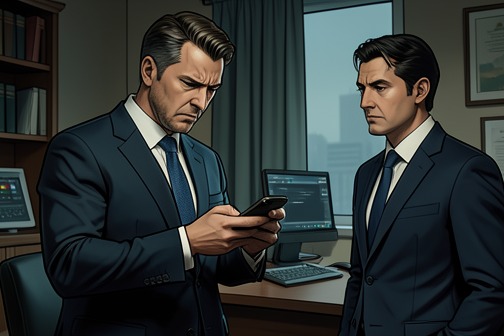
[Wataru Kimura's Rooftop Fall](entity:event-recall-event-wataru-kimura-0d9c9a4a335e) is the violent act that left [Wataru](entity:character-recall-character-wataru-5eead922f744) in a coma and exposed the [Prince](entity:character-recall-character-prince-0d58ca27fcd5)'s cruelty beneath a performance of sympathy. The Prince remembers shoving the boy from a department-store roof, while Wataru's grandfather can only describe the uncertain aftermath: he may wake at any time, or never wake at all.
## Background and Revelation
The fall enters the scene through a conversation about Wataru's condition. Asked whether his grandson is sick, Wataru's grandfather answers plainly that the boy fell from a department-store roof and has been in a coma in the hospital ever since. His bluntness does not erase the pain in the account; he compares Wataru's absence to a world darkened by the goddess Amaterasu hiding in a cave, and says the family needs the gods to call him back.
## The Prince's Recollection
The grandfather's account is not new to the Prince. Although he brings his fingertips to his mouth and acts shocked, inwardly he recalls Wataru's uncomprehending terror at the moment he shoved him out into space. The contrast between the grandfather's grief and the Prince's private memory makes the scene's cruelty depend on a concealed truth: the person performing concern is the person who caused the fall.
## Consequences and Significance
Wataru remains unconscious in the hospital, and the doctors offer no certain prognosis: he could wake at any time, or might never wake. The fall therefore leaves the family suspended between hope and permanent loss, while the Prince treats their anguish with inward contempt. In the conversation, [Nanao](entity:character-recall-character-nanao-7c7ef51f63e8) asks about Wataru and listens softly as the grandfather explains the medical uncertainty; the Prince's false display of shock continues alongside his knowledge of what happened. The event is presented not as an accident, but as deliberate violence whose consequences remain unresolved.
Event 24
Nanao Kills Tangerine
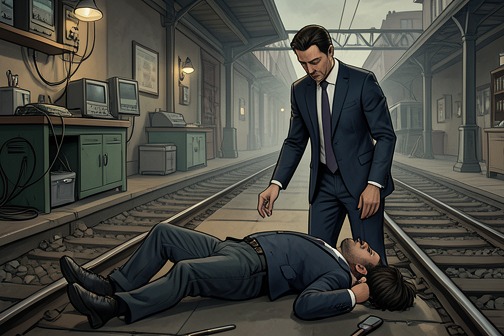
[Nanao Kills Tangerine](entity:event-recall-event-nanao-tangerine-1c67092414f2) is the sudden reversal in which [Nanao](entity:character-recall-character-nanao-7c7ef51f63e8) intervenes as [Tangerine](entity:character-recall-character-tangerine-92552f325c36) threatens [Prince](entity:character-recall-character-prince-0d58ca27fcd5) aboard the Shinkansen. The killing turns a moment of apparent danger into an immediate, decisive act of violence, driven not only by the present threat but by Nanao’s memory of a child he once failed to protect.
## The Sudden Reversal
Prince has been told that pulling the gun’s trigger would make it explode and injure him, but he believes his luck protects him and no longer fears Tangerine. When a door slides open behind Tangerine, Prince cries out for help, pleading as though Tangerine is about to kill him. Tangerine turns sharply toward the sound and topples over, his gun falling with him. Nanao stands over him; the train carries Tangerine’s body along the floor with a shuddering that resembles a funeral procession, while Nanao stares blankly at his broken-necked corpse.
## The Trigger for Intervention
Nanao had gone to retrieve the suitcase from the crew room. When he returned, he found Tangerine pointing a gun at Prince. The threat became personal through the child’s face and voice: Prince’s expression and the catch in his plea for help stirred Nanao into action before he could stop to reason through it.
In that moment, Nanao saw not only the boy before him but the kidnapped child he had abandoned long ago. The memory collapsed into the present; his mind emptied, and his body moved automatically. He seized Tangerine from behind and wrenched his head sideways. The narration describes the response as primal: Nanao sensed that merely attacking Tangerine without finishing him would leave him in danger. The intervention is therefore both an immediate response to Prince’s vulnerability and a violent return of Nanao’s unresolved past.
Afterward, Nanao asks why Tangerine had been trying to shoot Prince. Prince says he does not know, explaining that Tangerine found the bodies in the train toilet and then went out of control. His answer offers Nanao an account of the escalation, but not a complete explanation of Tangerine’s intentions; the scene leaves the killing rooted most firmly in Nanao’s own split-second recognition of a child in danger.
## The Aftermath and Its Narrative Weight
The killing ends the immediate danger to Prince, but the scene does not present Nanao as emerging from it with relief or triumph. He has no sighs left; he looks down at Tangerine’s corpse blankly. That stillness sets the force of the act against its aftermath: Nanao has acted with lethal certainty in the instant of danger, yet the narration gives no corresponding release. The gesture has answered the threat, while leaving the memory that helped trigger it unresolved.
The train’s movement makes the death at once intimate and impersonal. Tangerine falls onto the Shinkansen floor, and the carriage bears his body onward with a judder likened to a funeral procession. Nanao stands above the corpse, a witness to the consequence of his own reflex. The image turns the train into more than a setting for the killing: its forward motion carries the dead away even as Nanao remains fixed over what he has done.
## Delayed Identification
The scene withholds Nanao’s identity at the instant he enters: first, the door slides open and only “someone” steps through. The narration then stays with the rapid consequence—the sharp turn, the fall, the dropped gun—before naming Nanao above Tangerine’s body. That brief delay makes the intervention register first as a sudden interruption of Prince’s danger and only afterward as Nanao’s act. The sequence gives the killing its abruptness without obscuring its cause: the figure who arrives unseen is the person whose memory of an abandoned child has already prepared him to respond.
Event 25
Wataru Is Attacked and Rescued at the Hospital
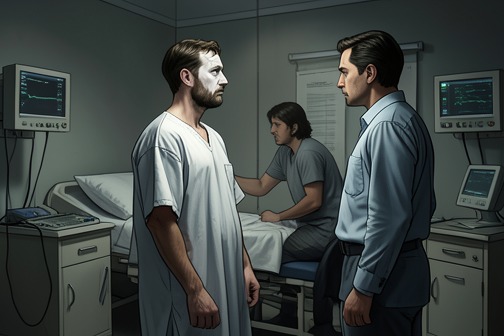
[Wataru Is Attacked and Rescued at the Hospital](entity:event-recall-event-wataru-a21168cfb19c) is the episode in which a planned assault on [Wataru](entity:character-recall-character-wataru-5eead922f744)’s life-support system is stopped before it can take him from his family. Its decisive turn comes through two very different interventions: [Morning Glory](entity:character-recall-character-morning-glory-1f91e8eb7fcb) intercepts the fleeing attacker, while [Shigeru Kimura](entity:character-recall-character-shigeru-kimura-073af62586f2), sent to check on Wataru, accidentally wakes the boy. The sequence makes rescue both deliberate and inadvertent, and answers [Kimura](entity:character-recall-character-kimura-2baaf2a90146)’s fear with news he had scarcely dared hope for.
## The Threat at the Hospital
The danger begins with a man waiting inside the hospital, dressed as a nurse and eager to act against Kimura’s son. The [Prince](entity:character-recall-character-prince-0d58ca27fcd5) has arranged the attack and gives the man a condition for proceeding: if the Prince does not answer a call after ten rings, the attacker may go ahead. The rule leaves the decision suspended between a signal and its absence, while the attacker’s impatience makes clear that he is ready to exploit the opening.
The Prince’s reflections expose the assailant’s self-justification. He imagines the man telling himself that altering medical equipment would not really count as murder, even though doing so could destabilize a child’s condition. That rationalization gives the threat its particular character: Wataru is not approached in an open confrontation, but endangered through the machinery keeping him alive. The attacker’s apparent professional role could make his actions look ordinary in the room, concealing the violence inside a medical procedure.
## Shigeru’s Warning and Morning Glory’s Search
Shigeru Kimura goes to the hospital at the request of his friend, who has asked him to check on his grandson. Near the patient rooms, Shigeru sees a man in a white coat enter Wataru’s room and begin pressing buttons on the life-support machine. Unable to confront him openly, Shigeru hides beneath the bed among the cords, plugs, and wires. From there he notices the man’s muddy, stained shoes. The shoes are a small but telling discrepancy: they make Shigeru doubt that the supposed medical professional belongs there.
Shigeru contacts Morning Glory and explains what he has seen. The instruction is not merely to guard Wataru; if anyone tries to hurt the boy, Shigeru has been told to show no mercy. Morning Glory initially points out that protecting the patient does not necessarily require catching the attacker. But the man’s escape from the hospital changes the problem from a vague warning into a visible pursuit. He runs out carrying a white bundle that proves to be his hastily removed coat, and Shigeru identifies him as the suspect.
The setting turns the earlier clue into confirmation. As the fleeing man crosses toward a traffic island, Morning Glory sees the mud on his shoes—the same detail that alerted Shigeru beneath the bed. The attacker has shed the white coat, but not the evidence of his passage. He stops to wait for the light and takes out his phone, momentarily exposed in the open rather than protected by the appearance of hospital authority.
## The Interception
Morning Glory approaches without making a sound. He watches the man’s breathing and the traffic light, opens and closes his hand, slows and then stops his breath, and judges the speed and timing of the oncoming cars. The account renders the intervention as a sequence of controlled physical decisions rather than a sudden blur: watch, measure, focus, touch. At the same instant, a ladybug rises into the air nearby; then the brakes of a car shriek, and the attacker’s phone falls to the ground.
The collision leaves the attacker down in the street, run over by a car. Later, Shigeru tells Kimura that the man who targeted Wataru has been taken care of, and clarifies that a professional—not Shigeru—did it. The distinction connects the hospital danger to the intervention without claiming more than the episode establishes about the attacker’s eventual condition. The immediate result is clear: the man who had tampered with Wataru’s life-support machine can no longer continue the assault.
## Wataru Wakes
While Morning Glory deals with the fleeing attacker, Shigeru remains at Wataru’s bedside. He stumbles—or, as he describes it, flails—and wakes the boy, who had been sleeping peacefully. Wataru opens his eyes, mumbles, and smacks his lips. Shigeru apologizes because he knows Kimura hates waking people from sleep, but insists that he meant no harm. His clumsy mistake produces what the deliberate rescue alone could not promise: Wataru is awake.
The news reaches Kimura aboard the train. At first, Kimura misunderstands Shigeru’s apology and imagines that he may have knocked into or broken one of the machines. Shigeru then confirms that Wataru really woke up. Kimura replies that he is glad he asked for help, explaining that when he called Shigeru he could not even be certain whether Wataru was in danger. The account closes the distance between that uncertainty and the boy’s opened eyes, while preserving the relief as something discovered through a friend’s report rather than witnessed by Kimura himself.
## Rescue and Contrast
The episode binds two forms of protection together. Morning Glory acts with practiced attention to breath, fingertips, and traffic; Shigeru hides beneath a bed, notices dirty shoes, and then wakes Wataru by stumbling. One intervention is calculated, the other accidental, but each changes the outcome: the attacker is stopped, and the child returns to consciousness. Shigeru’s account also makes the rescue communal. He follows his friend’s request, calls for help when he cannot handle the threat alone, and later tells Kimura what happened; Kimura answers with gratitude and an apology for having asked at short notice.
The ladybug gives Morning Glory a counter-image to his own work. He imagines its seven dark spots carrying sadness and its flight lightening that sadness, if only by a tiny amount. He recognizes that his work has the opposite effect: each person he pushes adds shadows to the world. The image does not erase the violence of his intervention, but it places the act beside his awareness of the harm he causes. Against the attacker’s attempt to disguise tampering as something short of murder, the sequence offers a rescue whose consequences are concrete: the threat is halted, Shigeru’s warning proves vital, and Wataru wakes.
Event 26
The Kimura Couple Confronts the Prince Aboard the Hayate
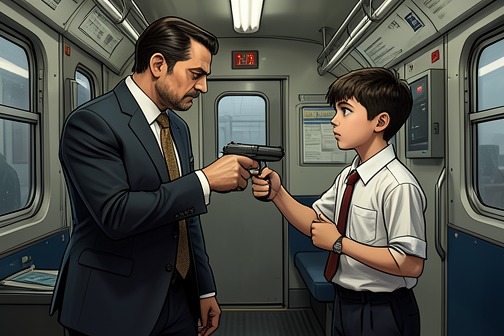
[The Kimura Couple Confronts the Prince Aboard the Hayate](entity:event-recall-event-kimura-hayate-0dd743d2e99e) is a family rescue that becomes an armed contest over who controls the truth. [Shigeru Kimura](entity:character-recall-character-shigeru-kimura-073af62586f2) and [Akiko Kimura](entity:character-recall-character-akiko-kimura-240ef9a8c156) arrive seeking their son, [Yuichi Kimura](entity:character-recall-character-yuichi-kimura-a968d402d644), but find the [Prince](entity:character-recall-character-prince-0d58ca27fcd5) aboard the train. The Prince tries to turn their fear for [Wataru](entity:character-recall-character-wataru-5eead922f744) into leverage; later, confirmation that Wataru is safe strips that tactic of force. The encounter moves from a tense first meeting to a direct threat, then breaks off amid a gunshot whose source is not identified.
## Arrival and Recognition
Shigeru Kimura explains that he and Akiko Kimura rushed to catch the train at [Mizusawa-Esashi Station](entity:location-recall-location-a135ac8e5db1) because a phone conversation with Yuichi Kimura had worried them. Their haste establishes the family stakes before they have even located their son: they have come because they believe he is in trouble, and Shigeru asks where he is. The Prince, who has been speaking with them as a schoolkid, recognizes them as Yuichi’s parents. Though they are meeting in person for the first time, Shigeru says that the Prince already knows him from their recent phone call.
The Prince’s manner does not reassure the newcomers. [Nanao](entity:character-recall-character-nanao-7c7ef51f63e8) describes him as a boy who chooses his words carefully and remarks on his smell; the Prince responds with a sulky expression, objecting to the insult while saying he had not meant offense by calling Shigeru grandpa. The exchange gives their meeting an uneasy, almost ordinary social surface, but the family relationship underneath it is immediately consequential. Nanao intervenes on the Prince’s behalf, describing him as an ordinary schoolkid caught in danger and asking Shigeru not to be too hard on him. Shigeru rejects that description: he does not regard the Prince as merely an ordinary boy.
## The First Armed Standoff
As he makes that judgment, Shigeru reaches into his jacket. Nanao reacts instinctively, drawing the gun from behind his belt at the same moment Shigeru draws his own and aims at the Prince. The three are seated close together, with guns inches from the faces of the Prince and Shigeru. Nanao registers the arrangement as surreal: the seats face one another as if meant for conversation or cards, yet the encounter has become an armed standoff. Shigeru warns the Prince that telling the truth may be his chance to survive.
The moment puts Nanao between a family seeking answers and a boy he has just defended. Shigeru’s arrival was driven by concern for Yuichi, but his attention now fixes on the Prince; Nanao’s quick draw prevents the older man from having unopposed control of the confrontation. The train’s close seating makes the threat immediate, while the Prince’s composure and careful speech make it difficult to read him as a helpless child. The scene’s central conflict is therefore not only over what happened, but over whose account of danger the others will believe.
## The Prince Turns Concern into Leverage
The Prince later uses the Kimuras’ concern for their grandson to influence the encounter. Shigeru and Akiko speak of their age and experience, a confidence the Prince finds irritating. He takes a deep breath, controls his anger, and apologizes before telling them that it may already be too late for their grandson. Their stillness marks the force of the revelation. When Shigeru asks what he means, the Prince explains that he had been told to answer an earlier call or the boy in the hospital would die. He adds that he had to answer before the phone rang ten times, and blames Shigeru for not letting him take the call.
This account is presented as the Prince’s explanation, not as confirmed fact. He makes himself sound docile, lets his shoulders tremble, and privately treats the Kimuras’ alarm as a step toward securing dominance. Akiko, shaken by what she has heard, proposes that they try calling. The Prince agrees and offers his phone, while pointedly reminding Shigeru that he is supposedly not allowed to move. The offer changes the pressure in the scene: a phone that the couple had been wary of letting the Prince touch now becomes something they urgently want to use. His claim has made their protective impulse serve his immediate purpose.
## Confirmation at [Morioka](entity:location-recall-location-morioka-dfdcde72cab9)
At Morioka, Shigeru hands the phone back to the Prince after learning that the ticker message was right: Wataru is safe. Akiko leans toward her husband, jubilant and asking whether the news is true. Shigeru also says that Wataru is awake. The discovery overturns the Prince’s attempt to make the unanswered call seem decisive. The outcome he had described as imminent is not what the couple now knows to be true, although the evidence does not establish who sent the earlier warning or exactly how the danger was resolved.
When the Prince starts to speak, Shigeru cuts him off and refuses to answer his questions. Instead, he names the things the Prince does not know: who Shigeru had just spoken to, and that Wataru is safe and awake. He accuses the boy of assuming that adults are fools and of believing that he already understands everything. The Prince denies this, continuing to present himself as helpless, but the reversal is unmistakable. He had tried to dictate what the Kimuras believed by controlling the meaning of the phone call; now the family possesses information he lacks.
Shigeru then raises his gun to the Prince’s forehead and speaks about the uncertainty of surviving another fifty years. He contrasts the Prince’s confidence in his own luck with the years of life the older couple have already endured, insisting that they have a future the boy cannot presume to outlast. His threat is to disable the Prince and carry him away, not to kill him immediately; he says he wants the boy to have time to reflect on his actions. Akiko backs her husband, saying she will not try to make him go easier on the Prince this time. When Shigeru continues describing what he intends to do, however, she taps his shoulder and tells him they are not doing that again.
## An Unresolved Departure
Shigeru’s anger does not erase his anxiety about Yuichi. Akiko steadies him by saying she is sure their son is alive and would not give in while worrying about Wataru. Shigeru agrees, describing Yuichi as exceptionally hard to kill. The exchange grounds the threat against the Prince in the Kimuras’ immediate fear for their son: even after receiving reassuring news about Wataru, they have not yet seen Yuichi, and their confidence in him remains a source of resolve. The Hayate pulls into [Morioka Station](entity:location-recall-location-852a862256a8) as they speak.
The passage then shifts to Nanao, who hears a sudden bang as passengers step onto the platform. The other passengers appear to accept it as an ordinary train sound, but Nanao recognizes it as a gunshot and thinks it probably came from car eight, where the facing seats are located. This places a sharp sound immediately after the confrontation without identifying who fired, at whom, or with what result. The scene therefore closes on a reversal in knowledge but not a settled resolution: Wataru is confirmed safe and awake, while the fate of the armed encounter remains uncertain.
Event 27
Nanao Kills Hornet's Female Partner Aboard the Train
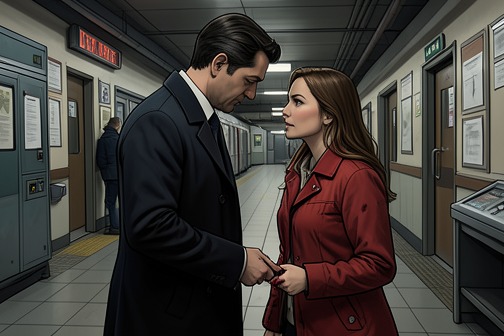
[Nanao Kills Hornet's Female Partner Aboard the Train](entity:event-recall-event-hornet-nanao-ae5048b62d75) is known chiefly through [Nanao](entity:character-recall-character-nanao-7c7ef51f63e8)'s brief account to [Maria](entity:character-recall-character-maria-de0c38967fe7) after they leave the scene of [Minegishi](entity:character-recall-character-minegishi-c0247f8417a0)'s stabbing at [Morioka](entity:location-recall-location-morioka-dfdcde72cab9). Nanao says he encountered the woman associated with the [Hornet](entity:character-recall-character-hornet-2ac6c7f226f1) selling concessions on the train and took her out; the exchange then opens a larger possibility that the Hornet was a pair, with separate attackers targeting Minegishi and his son. The account identifies Nanao's intervention but leaves its method and precise circumstances unstated.
## Causes and Background
The conversation takes place as Nanao and Maria descend an escalator, leaving the commotion around Minegishi behind. Someone has noticed an object stuck in Minegishi's back, and another voice identifies it as a needle. The discovery makes the Hornet a plausible connection, but it does not, by itself, establish who attacked Minegishi or whether that person was the same attacker Nanao met aboard the train.
Nanao turns to Maria and asks whether she thinks it was the Hornet. Her question refers to the poisoner, not the insect; Maria makes that distinction explicit. The exchange links the needle at Minegishi's back to the possibility of a poisoner, while keeping the identification tentative. The pair are working from a clue and from what they know of the Hornet, not from a confirmed account of the stabbing.
## Nanao's Account of the Encounter
Nanao tells Maria that he ran into the woman on the train while she was selling concessions, and that he took her out. His voice is described as low and distant. The phrasing establishes that Nanao acted against her, but the conversation gives no further description of what he did, where on the train the encounter occurred, or how it ended. The canonical event identifies her as the Hornet's female partner and records the encounter as her death; Nanao's compressed report does not itself explain the mechanics.
As he speaks, an image comes into Nanao's head of a man in a double-breasted uniform confronting Minegishi. Nanao's immediate question about the conductor shifts the discussion from the woman he remembers to the man he has pictured. The transition matters: the possible second attacker enters the conversation as an image and a suspicion, rather than as a verified identity or a witnessed killing.
## The Two-Attacker Possibility
Nanao recalls that the Hornet might have been two people. Maria agrees that the poisoner could have worked alone or as part of a duo. Nanao had been sure there was only one person; faced with the possibility of a conductor involved in the attack on Minegishi, he revises that assumption. He reasons that the pair may have been after both Minegishi and his son.
The proposed division of roles remains explicitly uncertain. Nanao suggests that the woman with the snack trolley may have been responsible for [Minegishi's son](entity:character-recall-character-minegishi-9df0dc06d55c), while the conductor may have dealt with Minegishi at Morioka. Neither he nor Maria establishes this as fact. The theory instead gives a possible structure to the two apparent attacks: one disguised among the train's concession service, the other associated with the conductor and the later discovery of a needle in Minegishi's back.
## Significance and Limits of the Account
Maria connects the hypothesis to the Hornet's reputation: the poisoner became famous by taking out [Terahara](entity:character-recall-character-terahara-d86d820f45a7), and an attack on Minegishi might have offered another prominent target. Her reasoning makes the proposed attack legible as an effort to add to that reputation, but it does not prove the motive or confirm that two people were involved. The exchange ends with the pair at the bottom of the escalator and Maria suggesting that Nanao may be right.
The event's significance lies in the shift from Nanao's certainty that he encountered a lone Hornet to a tentative account of coordinated attacks. His intervention against the woman is clear in broad outline; the larger operation is not. The needle, the uniformed man in Nanao's mind, and the woman's concession-seller disguise supply clues, while the division of targets and the identity of the person who attacked Minegishi remain conjectural.
Event 28
Minegishi Is Assassinated at Morioka Station
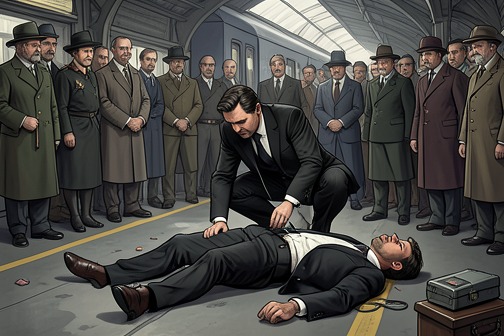
[Minegishi Is Assassinated at Morioka Station](entity:event-recall-event-minegishi-a71ced87cf04) is the sudden platform attack that brings [Minegishi](entity:character-recall-character-minegishi-c0247f8417a0)’s presence in the train’s unfolding violence to an end. Seen by [Nanao](entity:character-recall-character-nanao-7c7ef51f63e8) and [Maria](entity:character-recall-character-maria-de0c38967fe7) just as they are leaving, the collapse is at once physical fact and unanswered question: Minegishi is down, a needle is found in his back, and the [Hornet](entity:character-recall-character-hornet-2ac6c7f226f1) becomes the leading suspect, but no one witnesses the attack itself.
## The Collapse on the Platform
Nanao and Maria are on their way to the escalator when a crash sounds behind them. Its force reaches Nanao as more than noise: he senses a tremor, as if something enormous has fallen, and feels the gravity of an event before he knows what has happened. A voice cries out. When he turns, the men in black suits are crouched on the platform, trying to support Minegishi. The man who had been standing so solidly is now on the ground, toppled like a broken wooden doll.
The scene gives the attack a stark before and after. Nanao sees Minegishi upright in the moment immediately preceding the collapse, then sees the men gathered around him; the decisive act itself remains outside his view. The disturbance draws a crowd, and someone shouts that something is stuck in Minegishi’s back. Another voice identifies it as a needle. The weapon is thus disclosed through the confused testimony of people at the scene, not through a clear account of who used it or how.
## Suspicion Falls on the Hornet
Nanao and Maria do not stay to investigate. Maria urges him to leave, and he agrees that there is nothing to be gained by remaining. As they descend the escalator, he asks whether the Hornet was responsible. Maria initially misunderstands the name as referring to the insect; once she recognizes that he means the poisoner, she considers the possibility. Her reasoning turns on the Hornet’s prior notoriety for killing [Terahara](entity:character-recall-character-terahara-d86d820f45a7): an attack on Minegishi, she suggests, might be an attempt to add another prominent target to that record.
The possibility fits the needle and the Hornet’s reputation, but the conversation does not establish the assassin’s identity. Maria frames the theory as speculation, not confirmed knowledge, and the narration supplies no eyewitness who saw the attacker. Her further observation—that people may return to former successes when they have run out of ideas—casts the suspected strike as a repetition of an earlier achievement. That reading gives the attack a possible logic, while leaving its author and immediate circumstances unresolved.
## Departure and the Search for Meaning
By the time Nanao and Maria reach the bottom of the escalator, police, railway staff, and security personnel are running in the opposite direction, toward the platform. Their response suggests that the disturbance has reached the authorities, whether through the events on the train or Minegishi’s collapse. Yet they may not know precisely what has happened, and Nanao and Maria are already moving away from the scene. The crowd and approaching officials mark the beginning of a public response, not an investigation whose findings the passage records.
The collapse also changes how Nanao thinks about the people connected to the violence. He wonders whether the conductor might be one of the [Hornets](entity:organization-recall-organization-hornets-802fdb59226c) and whether that man knows his partner is dead. Nanao himself killed her, yet he feels a pang of sadness for the man and imagines a band with one member missing, waiting in vain for her return. This thought does not solve Minegishi’s killing; instead, it places Nanao’s suspicion inside a chain of losses in which even an enemy’s grief can register. Maria then brings him back to a practical question: what happened to the suitcase he had been carrying?
## The Train’s Other Violence
A later account of the events at [Morioka](entity:location-recall-location-morioka-dfdcde72cab9) adds a separate strand to the aftermath. Multiple men with gunshot wounds are found around car eight, screaming in pain; each has been shot through both shoulders and both legs, leaving them unable to move. Nanao concludes that the [Kimura](entity:character-recall-character-kimura-2baaf2a90146) couple must have shot their way out of the train while it was crowded with Minegishi’s men. He has difficulty picturing the older couple repeatedly placing bullets in exactly the same locations, as if applying an official stamp, but judges that this must be what happened.
Those wounded men are not presented as the attackers who brought Minegishi down: their injuries are attributed to the Kimura couple’s escape, while the needle in Minegishi’s back points Nanao and Maria toward the Hornet. The two episodes therefore converge at Morioka without becoming the same action. Minegishi’s collapse exposes the vulnerability of a powerful figure amid the broader train conflict; the carefully repeated shots show the Kimura couple forcing a way out through his armed men. The station becomes the point where these separate consequences surface, while the identity of Minegishi’s assassin remains a suspicion rather than a witnessed fact.
Event 29
The Hayate Train's Series of Deaths
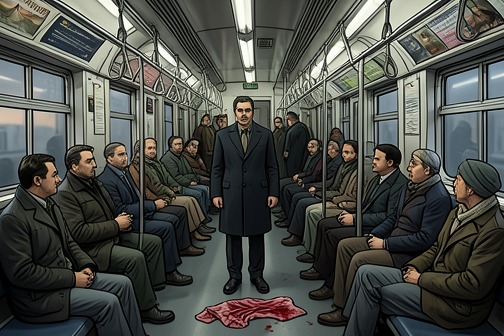
[The Hayate Train's Series of Deaths](entity:event-recall-event-hayate-36b217d1f477) turns a scheduled Shinkansen journey into a tightly confined criminal crisis whose full scale becomes visible only after the train reaches [Morioka](entity:location-recall-location-morioka-dfdcde72cab9). Bodies are found in passenger areas and toilets, [Minegishi](entity:character-recall-character-minegishi-c0247f8417a0) dies at the station, and a search of the train uncovers further evidence of armed confrontation. The public account narrows these events to an exceptional underworld feud; later details reveal both a survivor and an intervention by the Kimuras that the initial reports leave obscure.
## A journey shaped by timing and limited space
The chain unfolds in a setting governed by short intervals, crowded platforms, and movement between connected cars. When the train arrives, passengers spill onto the platform and the waiting lines form again without instruction. [Nanao](entity:character-recall-character-nanao-7c7ef51f63e8) watches this automatic reordering while he is still on the phone with [Maria](entity:character-recall-character-maria-de0c38967fe7). The train doors remain closed while cleaning staff are presumed to inspect the carriage, leaving him a brief pause before boarding.
Once aboard, Nanao sits at the end of car four with his phone in hand. The train is due to reach [Ueno Station](entity:location-recall-location-ueno-station-518512ec2f76) only minutes after leaving [Tokyo Station](entity:location-recall-location-tokyo-station-f824d5350286), and he expects little time to steal the black suitcase. When he goes to the luggage rack, he finds it without difficulty: a mid-sized, hard-sided case on wheels, marked by a sticker near its handle. He carries it back through car four and car five toward the space between cars five and six, trying not to attract notice. The errand's narrow time window and the train's successive compartments make ordinary movement part of the danger.
The low passenger count also has a deliberate cause. Minegishi later explains that, after learning which train would carry his son, he bought all the available seats. He says he wanted fewer variables and believed that fewer passengers would make it easier for [Tangerine](entity:character-recall-character-tangerine-92552f325c36) and [Lemon](entity:character-recall-character-lemon-6048d05b659f) to keep the boy safe. What initially appears to Nanao as a train with many empty seats is thus connected to Minegishi's attempt to control the conditions around his son—and to the criminal operation unfolding in the same confined space.
## Suspicion, arrival, and the search
The danger is not limited to the moment the train is moving. When Tangerine and Lemon stop at a platform to look down the length of the train, they watch for anyone getting off. No one leaves. They notice only an unfamiliar man in a flat cap standing near the doors to cars five or six, a detail that does not resolve their uncertainty about who might be suspicious. The platform's open sightline offers a temporary means of surveillance, but not an answer.
Later, a speaker announcement says the train will arrive at Morioka in five minutes. A child's excited call to his grandfather catches the attention of an elderly couple, who turn toward the voice. The announcement and the child's call mark the start of a rapid succession of events, while the couple's reaction shows how easily ordinary passenger activity can redirect attention in the carriage.
At Morioka, men in suits pour onto the train rather than approaching Nanao to ask about the suitcase. They search through its cars thoroughly, interrupting the train's expected departure for the depot or cleaning. The narration compares their movement through the carriage to ants burrowing into a great worm. Nanao recognizes Minegishi among the men waiting at the front of the train and understands that the searchers are Minegishi's forces. The bodies have not yet been formally described in the aftermath, but the narrative makes their discovery feel imminent: there are bodies in a toilet and [Wolf](entity:character-recall-character-wolf-dce91b915da2)'s body in the seat where Nanao left it.
## Deaths and the incomplete public account
Two months later, Maria tells Nanao what became public. Several bodies were found in the train's bathrooms and passenger seats. The dead were not identified in the news as ordinary travelers: reports described them as people connected to dubious circumstances, including the person who had worked the snack trolley. Most media accounts adopted the police's broad framing of a feud within the criminal underworld and omitted details outside that explanation. The incident was presented as exceptional, reassuring the public that ordinary train travel was not under threat and avoiding the fear—and possible economic damage—that wider alarm might cause.
Minegishi's death was reported separately. He was described as a prominent Iwate resident who died suddenly at the station because of difficulty breathing. Although his death took place on the same platform as the train's arrival, the news treated that proximity as coincidence and did not connect it to the events aboard the Hayate. His criminal career and network of influence remained unmentioned. The public narrative therefore separated a death at the station from the deaths discovered on the train, rather than treating them as parts of the same sequence.
The report also corrects one assumption about the train's dead. [Kimura](entity:character-recall-character-kimura-2baaf2a90146), who had been with the schoolboy, was found alive in a toilet, taken to hospital, and stabilized. The reporting then stopped. No public information explained what happened to the boy or the elderly couple. Nanao, who had witnessed the old man's conduct, suspects that the man would have shot even with the boy present and might then have carried him out while presenting himself as a grandfather helping a sick child. That remains Nanao's inference, not a confirmed account of the boy's fate.
## Evidence of the Kimuras' intervention
Later information adds another layer to the Morioka search. Investigators found signs of gunfire in car eight, where Kimura had been sitting, but no blood. Maria also reports that several men with gunshot wounds were found around that car at Morioka. They had been shot in both shoulders and both legs, leaving them unable to move. Nanao concludes that the Kimuras must have fired their way out while Minegishi's men were searching the train. The detail changes the picture of the elderly couple: their attention to the child had not exhausted their role in the crisis, and their actions appear in the record through the wounded men rather than through a clear public account of what they did.
The event's aftermath is defined by this uneven visibility. The train's bodies prompt national attention, but the accepted explanation keeps the deaths inside a generalized criminal feud. Kimura's survival is briefly confirmed and then left without further reporting; the schoolboy's fate remains unknown; Minegishi's death is detached from the train's arrival; and the Kimuras' gunfire is reconstructed from physical evidence and Nanao's reasoning. The Shinkansen's ordered compartments thus become both the setting of the violence and the structure through which its participants, evidence, and public explanations are separated.